New Launch Projects in Delhi
Delhi launches fewer residential projects in a year than Gurgaon launches in a quarter. There is no land bank left inside the city, so almost every new launch project in Delhi comes from redevelopment, where an old plot or a low rise society is demolished and rebuilt as a high rise. That scarcity is why Delhi launches sell differently from launches anywhere else in NCR. Inventory is small, the buyer pool is deep, and the difference between a good outcome and a bad one is decided almost entirely by what you verify before you pay the booking amount. This page carries new launch projects in Delhi checked for Delhi RERA registration, approval status and developer delivery record before they appear.
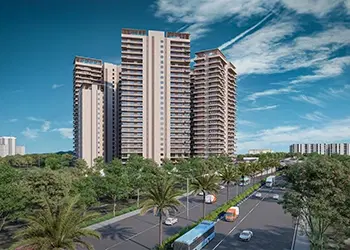
Galaxy Sawasdee Heights Delhi
- 3 BHK Apartments
- 2,271 - 3,054 Sq. Ft.
- Britannia Chowk, New Delhi
Latest New Launch Projects in Delhi 2026
A new launch project in Delhi is a residential development that has opened for sale but has not been completed, where units are bought at launch stage against a construction linked or milestone payment plan rather than against a finished flat. It covers freshly launched towers, new phases within an existing development, and under construction inventory still selling from the developer rather than through resale.
The listings on this page are concentrated in the redevelopment corridor running through Karol Bagh, Moti Nagar, Kirti Nagar and Patel Nagar, which is where most of Delhi's under-construction supply now originates, along with launches in Okhla, the Dwarka sectors and the southern belt.
Buying at launch is a different transaction from buying a finished home. You are paying against a drawing, a specification sheet and a committed date. The upside is entry pricing, choice of tower and floor, and a payment schedule spread across construction rather than paid upfront. The downside is that everything you were shown is a promise until the occupancy certificate arrives. This page is about closing that gap.
Configurations, carpet areas, current pricing, payment plans and possession timelines are updated on each project page. Use the filters above to sort new launch projects in Delhi by budget, bedroom count, locality and developer.
Delhi runs out of land, not out of demand, and that single fact shapes everything about how launches work here.
Gurgaon and Noida were planned as expansion cities with large parcels released by development authorities in sectors. Delhi was not. The city is fully built out, its colonies were laid out decades ago, and there is no equivalent of a sector release programme producing fresh group housing plots at scale. What supply exists comes from three places.
Redevelopment of older society and industrial land. An ageing low-rise property is acquired, demolished and rebuilt at a far higher floor area ratio. This is the source of most premium launches in Delhi today, and it is why the redevelopment corridor through Karol Bagh, Moti Nagar, Kirti Nagar and Patel Nagar carries a disproportionate share of the city's under-construction inventory.
Remaining planned land in the outer sectors. Pockets in Dwarka, outer Rohini and the northern periphery still have developable parcels, and this is where mid-segment and value launches appear.
Plot-level rebuilds. Builder floors on individual plots are a different product from a launched project and carry a different legal checklist.
The practical consequences for a buyer are direct. Inventory in any given Delhi launch is small, often a few hundred units rather than a few thousand. Launch pricing is less aggressive than in Gurgaon because the developer does not need volume absorption to fund the project. And a genuinely good Delhi launch sells out faster than a comparable Gurgaon one, so the decision window is shorter and the pressure to book quickly is real. Manage that pressure rather than responding to it.
New launches cluster in four belts, and each one serves a different buyer at a different price point.
| Belt | Localities | What Launches Here | Suits |
|---|---|---|---|
| Redevelopment corridor | Karol Bagh, Moti Nagar, Kirti Nagar, Patel Nagar, Punjabi Bagh | Premium and luxury high-rise towers on rebuilt plots, mostly 3 and 4 BHK | Upgraders, NRI buyers and HNI buyers wanting a central address |
| Central and business district edge | Connaught Place surrounds, Rajendra Place, Okhla | Limited ultra-premium and mixed-use residential, with the smallest inventory in the city | Buyers paying for address scarcity |
| Dwarka and outer west | The Dwarka sectors, Najafgarh Road belt | Mid-segment group housing, 2 and 3 BHK, with better price per square foot | Families and first-time buyers wanting a planned sub-city |
| South and southern periphery | Chhatarpur, Bijwasan, Satbari, the Mehrauli belt | Low-density formats, larger units, villas and low-rise homes | Buyers wanting space and airport or Gurgaon proximity from a Delhi address |
The redevelopment corridor is where most of the activity is, and it is worth understanding why. These plots occupy land that was zoned decades ago for lower-density use, so rebuilding at a higher floor area ratio releases genuine value. That is what makes the economics work for a developer, and it is why a two-decade-old industrial or commercial plot in West Delhi can become a residential tower.
These three terms are often used interchangeably in marketing, but they mean very different things for your money and your legal position.
Pre-launch means the project has not yet been formally launched and, in many cases, has not completed its RERA registration. Buyers are offered an early price against a booking or an expression of interest. This is the highest-risk stage in Indian real estate. Under the RERA framework, a project cannot be advertised or sold before registration, so anything being offered to you before a registration number exists is outside the protection the law was written to provide. Do not pay at this stage.
New launch means the project is registered, approvals are in place, and sales have formally opened. Pricing is typically at its lowest point in the project's life, choice of tower, floor and facing is at its widest, and the payment plan is spread across construction. This is the stage the listings on this page are drawn from.
Under-construction means the project launched earlier and is partway through construction. Prices have usually moved up from launch, and choice is narrower, but you can see actual progress on site rather than a rendering. The possession date is also closer and generally more credible.
The trade-off across the three is simple. The earlier you buy, the cheaper the entry and the longer the wait, but the more you rely on the developer rather than on evidence. Pre-launch removes the legal protection entirely, which is why it is not a trade-off worth making.
Delhi is priced on land value, and in a redevelopment project, that land value is already embedded in the launch price. There is no cheap Delhi launch in the sense that Gurgaon or Noida have cheaper launches because the underlying land is not cheap.
Mid-segment. Group housing in the Dwarka sectors, the outer west and the northern periphery. These projects typically offer compact 2 and 3 BHK configurations, standard amenity packages, the widest buyer pool and the most liquid resale.
Premium. The redevelopment corridor through West and Central Delhi. These projects offer larger 3 and 4 BHK units, full amenity packages and branded developers. This is the segment where most current launch activity is taking place.
Luxury and ultra-luxury. Found in Central Delhi and select South Delhi addresses. These projects feature very large residences, low unit counts per tower, private lift lobbies and pricing driven by address scarcity rather than construction cost.
What moves your number inside a band is the floor, facing, view, corner position and tower, and these preferential location charges are levied separately from the base rate. Ask for the full price sheet with every charge itemised rather than relying on a headline per-square-foot figure, because the gap between the two can be wide. Ask our team for current pricing on the specific project and configuration you are considering.
The payment plan decides your cash flow, your risk and sometimes your final price, yet buyers routinely spend hours evaluating the flat and minutes evaluating the payment plan.
Construction-linked plan. You pay in instalments tied to construction milestones. This is the most common structure and generally the safest for a buyer because your money follows visible progress. If construction stalls, your outflow stalls with it.
Down payment plan. You pay the large majority upfront and receive a discount for it. The discount may be real, but so is the exposure because you have paid for a building that does not exist yet and have given up the control that staged payments provide.
Possession-linked plan. You pay a smaller amount at booking and the balance at possession. This carries the lowest risk for the buyer and is correspondingly less common, usually appearing when a developer needs to move slower-selling inventory.
Flexi and subvention structures. These are variations where a lender funds construction-stage payments and the developer services the interest until a defined point. Read these carefully. The loan is in your name, and the liability reverts to you at the trigger date whether or not possession has happened.
Two rules apply regardless of which plan you choose. Get the full payment schedule in the builder-buyer agreement, not just in a brochure. Also confirm what happens to your instalments if possession is delayed beyond the RERA-committed date, because that clause determines whether a delay becomes the developer's problem or yours.
Delhi RERA registration is the single most important check on any new launch, and it takes ten minutes.
A project that is under construction and being sold must be registered. Once you have the registration number, verify these details against the filing rather than the brochure:
- The promoter name on the filing matches the entity you are actually contracting with.
- The project name, tower count and unit count match what is being marketed to you.
- The sanctioned plan and approvals uploaded to the portal are current and have not been superseded.
- The committed completion date, which is the date the developer is legally accountable for.
- Quarterly progress updates are being filed and are consistent with what you saw on site.
- Any complaints or orders recorded against the promoter or the project.
The committed completion date matters more than any other field. A verbal possession estimate from a sales team has no standing. The RERA date does, and it is the basis on which you can claim interest for delay. Take a screenshot of the filing on the day you book.
The RERA filing tells you that the project is registered. These checks tell you whether it is likely to finish well.
- Land title and the chain of ownership on the plot being redeveloped, with an advocate's search report going back thirty years.
- Freehold or leasehold status of the underlying land, since Delhi has both and leasehold adds a conversion and permission layer.
- Sanctioned building plan from the municipal authority, matched against the tower and unit configuration being sold.
- Permissible floor area ratio and height, confirmed against what the developer is actually building, because a deviation can surface later as an approval problem.
- Collaboration or development agreement where the developer does not own the land outright, showing what share of the project the landowner holds.
- Developer delivery record in the same segment, since delivering mid-segment projects on time is not evidence of delivering luxury finishes on time.
- Financial position of the project, including whether construction funding is secured or dependent on continued sales.
- Escrow compliance, since a defined share of buyer money must be held for construction under RERA.
- The builder-buyer agreement in full, particularly the delay clause, cancellation clause, carpet area variation clause and escalation clause.
- What the carpet area actually is, because the legal basis of sale is carpet area, not super built-up area.
Do not pay a booking amount before you have read the builder-buyer agreement. Once money changes hands, your negotiating position on the clauses is gone.
The headline rate is not the price. Budget for the full stack before you commit, because the gap between the base price and the all-in cost can regularly reach 15 to 25 percent.
- Preferential location charges for floor, facing, view, corner or park position.
- Club membership and amenity charges, usually a one-time payment separate from maintenance.
- Covered car parking, charged per bay.
- Power backup, charged per kVA of sanctioned load.
- Interest-free maintenance security, a refundable deposit held by the developer.
- Advance maintenance, often collected for the first year or two at possession.
- GST, applicable on under-construction property and not on a completed property with an occupancy certificate.
- Stamp duty and registration, paid separately by the buyer at registry and generally not fundable through a home loan.
- Registration and legal charges, along with the developer's documentation fee.
Ask for a written cost sheet with every line itemised and a total. A developer who will only give you a per-square-foot figure is not giving you a complete price.
The choice is between price and certainty, and Delhi tilts the calculation differently from other NCR markets because the resale stock here is dominated by older builder floors rather than recent apartments.
| Factor | New Launch Project in Delhi | Ready-to-Move-in Delhi |
|---|---|---|
| Price per sq ft | Lowest at launch | Higher for equivalent new construction |
| GST | Applicable | Not applicable with an occupancy certificate |
| Payment | Staged across construction | Largely upfront |
| Unit choice | Full choice of tower, floor and facing | Limited to what is available |
| What you inspect | Sample flat, drawings and specification sheet | The actual flat and the completed building |
| Amenities | Committed on paper | Built and verifiable |
| Rental income | Starts after possession | Immediate |
| Main risk | Delivery timeline and specification variance | Building age and society condition on older stock |
| Recourse | Delhi RERA complaint against the committed date | Limited; you bought as-is |
Buyers who want the newest construction and are willing to wait can choose a launch. Buyers who need to move in or want to see exactly what they are buying can choose a ready-to-move-in property and accept the premium. NRI buyers split both ways, and the deciding factor is usually whether the property needs to generate rental income immediately.
Every risk in a new launch is manageable, and each one should be addressed before you pay rather than after.
Delay. This is the most common problem. Manage it by treating the RERA-committed date as the real date, checking quarterly progress filings and reading the delay compensation clause before you sign.
Specification variance. What arrives may differ from the sample flat. Manage it by getting the specification schedule annexed to the agreement, including brand names, rather than accepting descriptive language such as “premium fittings”.
Carpet area variation. The final area may differ from what was sold. RERA sets limits on permissible variation and requires a refund beyond those limits. Confirm that the clause reflects this rather than a builder-friendly version.
Approval gaps. The project may be built beyond what was sanctioned. Manage this by matching the sanctioned plan to the marketed configuration yourself at the start.
Funding stress. The developer's cash flow may depend on continued sales. Manage it by checking the developer's delivery record, looking at whether other projects by the same developer are stalled and preferring developers with completed projects in the same segment.
Amenity shortfall. The clubhouse or other facilities may be delivered late or reduced. Manage it by having the amenity list and delivery timeline written into the agreement.
None of this requires you to be a lawyer. It requires you to ask for documents in writing and walk away from anyone reluctant to provide them.
Delhi launches sell on location and connectivity rather than on new infrastructure promises because the infrastructure is already built.
The metro network already covers every zone of the city, with Phase IV under construction and adding further coverage. The Namo Bharat corridor towards Meerut has extended the commutable belt eastward. Ring Road and Outer Ring Road connect the redevelopment corridor to the rest of the city, and Indira Gandhi International Airport is reachable from West and South Delhi in a way it is not from most of NCR.
This changes what you are underwriting. In Gurgaon or Greater Noida, a launch can be priced partly on infrastructure that has not been built yet, and buyers accept that as part of the upside. In Delhi, the infrastructure already exists, so what you are underwriting is the developer and the project, not the corridor. That is a narrower bet and, done properly, a safer one.
- Almost every new launch in Delhi comes from redevelopment, not fresh land.
- The Karol Bagh to Patel Nagar corridor carries most under-construction supply.
- Inventory per project is small, usually hundreds of units rather than thousands.
- Pre-launch selling is outside the RERA framework and should be avoided.
- Delhi RERA registration must exist before a project can be advertised or sold.
- The RERA-committed date, not the sales team estimate, is the enforceable date.
- Carpet area is the legal basis of sale, not super built-up area.
- GST applies to under-construction property and not to completed property.
- Add 15 to 25 percent to the base rate for the all-in cost.
- Stamp duty and registration are paid separately and are not loan funded