Residential Properties New Delhi
Residential properties in New Delhi cover a wider range than any other NCR market. Builder floors in South Delhi colonies, high rise apartments in Central and West Delhi, plotted land in Dwarka and Rohini, and large format sky residences coming out of redevelopment sites. Fresh land supply in the city is almost finished, which is the main reason Delhi addresses hold their value through every market cycle. Every new residential project in Delhi listed below is checked for RERA registration, title status and developer record before it appears.
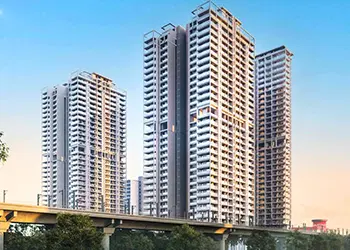
TARC Kailasa
- 3.5 & 4.5 BHK Apartments
- 3,440 - 4,246 Sq. Ft.
- Kirti Nagar, New Delhi
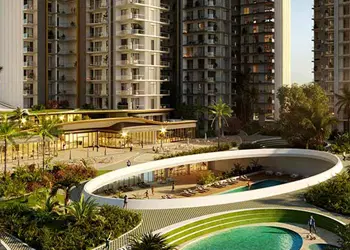
Unity Amaryllis Delhi
- 2, 3 & 4 BHK Apartments
- 1,252 - 2,500 Sq. Ft.
- Karol Bagh, New Delhi
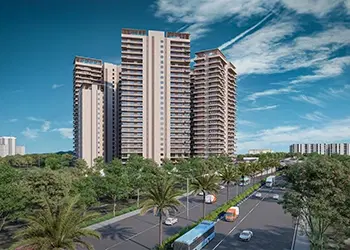
Galaxy Sawasdee Heights Delhi
- 3 BHK Apartments
- 2,271 - 3,054 Sq. Ft.
- Britannia Chowk, New Delhi
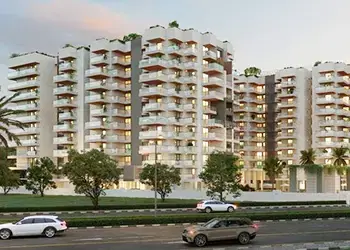
Tarc Tripundra
- 3 & 4 BHK Apartments
- 2,198 - 2,598 Sq. Ft.
- Bijwasan Rd, Kapashera, New Delhi
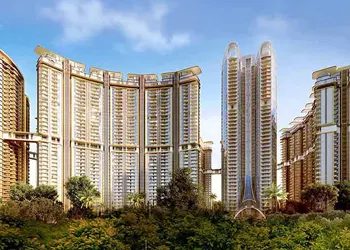
Unity The Amaryllis Phase 2
- 4 & 5 BHK Apartments
- 2,618 - 5,236 Sq. Ft.
- Karol Bagh, New Delhi

Unity The Amaryllis Iconic Tower
- 5 BHK Apartments
- 7,100 Sq. Ft.
- Karol Bagh, New Delhi
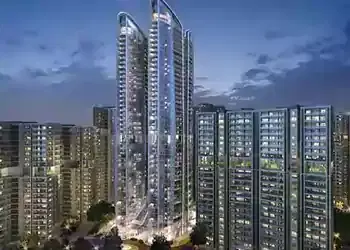
Unity The Amaryllis Phase 3
- 4 & 5 BHK Apartments
- 2,618 - 5,236 Sq. Ft.
- Karol Bagh, New Delhi
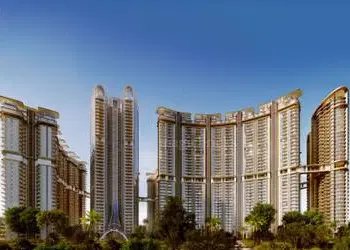
Unity The Sky Villa
- 4, 5 & 6 BHK Triplex & Duplex Sky villa
- 8,900 - 12,990 Sq. Ft.
- Karol Bagh, New Delhi
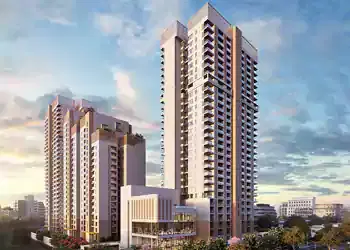
Godrej South Estate Okhla
- 2, 3 & 4 BHK Apartments
- 976 - 3,851 Sq. Ft.
- Okhla Delhi, New Delhi
Latest Residential Projects in New Delhi 2026 Residential property in New Delhi means any housing unit inside the National Capital Territory held for living rather than commercial use. It covers apartments in group housing and redevelopment projects, independent builder floors on plotted land, residential plots, villas and farmhouses, and resale flats in older cooperative societies. Most of it is freehold, which is what separates Delhi from the leasehold-heavy markets around it.
This page carries verified residential properties in New Delhi across South Delhi, West Delhi, Central Delhi, North Delhi, East Delhi and the South West belt near the airport. The mix runs from 2 BHK apartments in redeveloped colonies to 5 and 6 BHK duplex and triplex residences in the luxury segment.
Delhi works differently from Gurgaon or Noida. There are no 100 acre townships and no long list of simultaneous launches. Most new residential projects in Delhi come from redevelopment of older society land, group housing pockets, or land parcels released in Dwarka and the South West district. Supply stays thin. Demand stays constant. That is the shape of the market.
Configurations, carpet areas, current pricing and possession timelines are updated on each project page. Use the filters above to sort flats, floors and plots for sale in New Delhi by budget, bedroom count, property type and developer.
Delhi offers five residential formats, and the one you pick decides your legal checklist, your loan process and your resale market.
Apartments. Group housing and redevelopment projects across Karol Bagh, Okhla, Kirti Nagar and the Britannia Chowk belt. These come with gated security, lifts, club facilities, covered parking and power backup. Luxury apartments in Delhi are the fastest growing category here, and the one most NRI buyers choose.
Independent builder floors. The classic Delhi format. One floor of a plot, usually stilt parking plus upper floors, sold on a proportionate share of the land. Common across Greater Kailash, Defence Colony, Punjabi Bagh, Vasant Vihar and Model Town. Buyers get land share and privacy, without a clubhouse or maintained common areas.
Residential plots. Available in Dwarka, Rohini, Najafgarh and parts of the South West district. Plots give full control over construction and the strongest long term land appreciation, but need approvals, capital and time.
Villas and farmhouses. Concentrated around Chattarpur, Sainik Farms, Bijwasan and the Mehrauli belt. Large plot sizes, low density, and a separate legal checklist around land use.
Society and resale flats. Older cooperative group housing across Dwarka, Rohini, Mayur Vihar, Patparganj and Vasant Kunj. Entry pricing is lower and rental demand is steady, which keeps this segment active in the resale market.
Delhi property is bought for land value and address scarcity, not for rental yield. Six reasons drive that.
Land supply is finite. Delhi cannot expand outward. Every new residential project in Delhi comes from redevelopment or a small number of released parcels. Scarcity is the single strongest price support in this market.
Freehold ownership. Most Delhi colonies are freehold, which means clean title, easier resale, easier home loan sanction, and no ground rent liability. Very few NCR markets offer this at scale.
Rental demand does not depend on one industry. Diplomatic missions, central government, corporate head offices, hospitals, universities, and the legal sector all pull tenants into Delhi. Gurgaon rental demand tracks the IT and BFSI cycle. Delhi does not.
Address value. A South Delhi or Lutyens-adjacent address carries a resale premium that no new township can manufacture. Buyers pay for the postcode.
Redevelopment upside. Older colonies with low FAR usage are being rebuilt into modern residential projects in Delhi. Owners in these pockets are seeing land values re-rate as builders move in.
Infrastructure already exists. Metro coverage across all four zones, Delhi Metro Phase 4 lines under construction, Ring Road and Outer Ring Road, IGI Airport, and the best hospital and school density in NCR. You are not buying a promise. You are buying what is already built.
South Delhi holds the highest land value, Central Delhi carries the newest luxury supply, West Delhi and Dwarka offer the best value per square foot, and East Delhi has the lowest entry point with full civic infrastructure.
South Delhi. Greater Kailash, Defence Colony, Vasant Vihar, Vasant Kunj, Hauz Khas, Panchsheel Park, Safdarjung Enclave, Green Park and Saket. The most expensive residential real estate in Delhi by land rate. Mostly builder floors, with limited group housing.
Suits end users who want a settled neighbourhood and buyers looking at long term land value.
Central Delhi. Karol Bagh, Rajendra Place, Jor Bagh, Sundar Nagar and the Lutyens adjacent pockets. This zone now carries most of the city's high rise luxury redevelopment. Central location, direct metro access, and walking distance retail. The largest luxury flats in New Delhi are launching from this belt.
West Delhi. Punjabi Bagh, Rajouri Garden, Kirti Nagar, Moti Nagar, Paschim Vihar, Janakpuri and Dwarka. Strong business community base, heavy Blue Line and Pink Line metro coverage, and good value per square foot compared with South Delhi. Dwarka is the only planned sub city inside Delhi and offers apartments, plots and society flats together.
North Delhi. Model Town, Ashok Vihar, Civil Lines, Kamla Nagar, Pitampura, Shalimar Bagh and Rohini. Delhi University drives constant rental demand around Kamla Nagar and Model Town. Rohini and Pitampura offer larger apartment stock at accessible entry points.
East Delhi. Mayur Vihar Phase 1 and 2, Patparganj, Preet Vihar, Vivek Vihar, Anand Vihar and Laxmi Nagar. Direct connectivity to Noida and Ghaziabad, strong cooperative group housing stock, and the lowest entry price for a residential flat in Delhi with full civic infrastructure.
South West and airport belt. Bijwasan, Kapashera, Chattarpur and Najafgarh. Closest Delhi addresses to IGI Airport and to Gurgaon. Low density formats, larger unit sizes and gated projects. This belt attracts buyers who work in Gurgaon but want a Delhi address and Delhi property tax.
Property rates in Delhi are set colony by colony, not by city average. Two apartments of identical size can differ by several multiples because the land rate underneath them differs. Delhi is priced on land, not on built up area alone.
The city uses circle rates divided into categories A to H, set colony by colony. Category A covers the premium South and Central Delhi colonies. Market rates in the top categories usually run well above circle rate, while in some East and outer Delhi pockets the two sit close together. That gap matters, because stamp duty is charged on whichever value is higher.
Live pricing for each new residential project in Delhi appears on the project cards above and on the individual project pages. Ask our team for a colony level rate comparison before you shortlist.
Freehold means you own the land outright with no lease authority involved. Leasehold means the land is held on lease from a government agency, and every sale needs their permission. This is the first thing to check on any Delhi purchase.
Freehold. No time limit, no lease authority, no ground rent. Transfer is straightforward, banks fund it without extra conditions, and resale is easier. Most Delhi colonies converted to freehold decades ago.
Leasehold. Every sale and transfer needs written permission from the lease authority, which adds time to the transaction. Some buyers avoid leasehold entirely, and some lenders apply tighter conditions.
Conversion from leasehold to freehold is possible through the concerned land owning agency on payment of conversion charges, subject to documentation and dues clearance. If a property is still leasehold, confirm who bears the conversion cost and how long the process will take before you sign anything.
Documents Required to Buy Property in Delhi
The core set is the title chain, the sale deed, the freehold or conversion deed, the sanctioned building plan, the completion and occupancy certificate, the mutation record and cleared property tax. Builder floors need two more: the collaboration agreement and proof of undivided land share. Full checklist below.
- RERA registration number for any under construction housing project in Delhi, verified on the Delhi RERA portal before payment
- Title chain going back at least 30 years, with a lawyer's search report, particularly on builder floors
- Freehold or leasehold status, and conversion deed if the property was converted
- Sanctioned building plan from the local municipal body, matched against what is actually constructed
- Completion certificate and occupancy certificate for finished buildings
- Current permissible floor count and basement use under the applicable building bye laws, since this changes and directly affects what you can legally register
- Mutation records in the seller's name and property tax dues cleared to date
- Encumbrance check and no dues certificate from any lender holding the property
- Registered collaboration agreement between landowner and builder on builder floor purchases, showing which floors belong to whom
- Structural condition and remaining life on older buildings, including seismic compliance, since Delhi is in Seismic Zone IV
- Sanctioned electricity load, water connection and sewer connection in the seller's name
- Parking allotment recorded in writing, not verbally promised
Stamp duty in Delhi is 6 percent for a male buyer, 4 percent for a female buyer and 5 percent for joint male and female ownership, plus a 1 percent registration fee in every case.
| Buyer | Stamp Duty | Registration Fee | Total |
|---|---|---|---|
| Male | 6% | 1% | 7% |
| Female | 4% | 1% | 5% |
| Joint (Male & Female) | 5% | 1% | 6% |
| Joint (Both Female) | 4% | 1% | 5% |
Duty is calculated on the higher of the actual sale price or the applicable circle rate, so check the colony's circle rate category before you budget.
Buyers of property valued above 50 lakh must deduct 1 percent TDS under section 194-IA and deposit it against the seller's PAN. A different and higher TDS rate applies when the seller is an NRI, so check this before releasing payment.
Under construction property attracts GST. Ready property with a completion certificate does not. Registering in a woman's name or in joint names remains the simplest legal way to cut stamp duty outgo when buying property in Delhi.
Banks fund Delhi property, but freehold apartments in RERA registered projects clear far faster than builder floors or older construction. Lenders fund up to 80 to 90 percent of property value depending on ticket size, with the lower band applying to high value purchases. Registration and stamp duty are paid by the buyer and are not part of the sanctioned amount.
Freehold apartments in RERA registered projects are the easiest category to fund. Builder floors take more scrutiny, because banks want a clean title chain, an approved plan, and clarity on undivided land share. Some lenders decline old construction outright, or fund it on a shorter tenure. Plots are funded under a separate plot loan product, usually at lower LTV and shorter tenure than a home loan.
Get a pre approved sanction before you commit to a builder floor. It saves a lot of wasted negotiation.
NRIs and OCI cardholders can buy residential property in Delhi without RBI approval, paying through NRE, NRO or FCNR accounts. Agricultural land, plantation property and farmhouses are outside this permission.
Payments must move through those accounts or through normal banking channels. Cash purchase is not permitted. Indian home loans are available to NRIs, repaid through NRE or NRO accounts.
For registration in person, keep in mind that a Power of Attorney executed abroad must be signed before the Indian Embassy or Consulate, or notarised and apostilled, and then stamped in India within the prescribed period.
On resale, sale proceeds of up to two residential properties can be repatriated, subject to the original purchase having been funded through foreign exchange or NRE funds. TDS on an NRI seller is deducted at a higher rate, which is recoverable through a lower deduction certificate or a return filing.
Delhi residential property is a common NRI choice because of freehold title, established rental demand and family ties to the city. We handle video walkthroughs, document verification, PoA coordination and registry support for buyers based outside India.
Delhi gives freehold title and land backed appreciation on limited supply. Gurgaon gives scale, new construction and corridor driven upside. Noida gives the lowest entry price but mostly leasehold land.
| Factor | New Delhi | Gurgaon | Noida |
|---|---|---|---|
| Land Ownership | Mostly Freehold | Freehold | Mostly Leasehold from Noida Authority |
| New Supply | Limited, redevelopment-led | Very High, corridor-led | High, sector-led |
| Entry Ticket | High in South and Central Delhi | Wide range across corridors | Lowest among the three |
| Dominant Format | Builder Floors and Redevelopment Apartments | Group Housing and Plotted Townships | Group Housing |
| Rental Demand Driver | Government, Diplomatic, Corporate, Education & Healthcare | IT, BFSI and Corporate Offices | IT and Corporate Offices |
| Appreciation Pattern | Slow and Steady, Land-backed | Cyclical, Corridor-dependent | Infrastructure Event-driven |
Buyers who want scale, amenities and new construction usually go to Gurgaon. Buyers who want land value, freehold title and a central address stay in Delhi.
- Freehold title across most Delhi colonies
- No fresh land supply, which protects long term value
- Circle rate categories A to H set colony by colony
- Stamp duty 4 percent for women buyers, 6 percent for men
- Metro coverage across all four zones, Phase 4 under construction
- Rental demand spread across government, corporate, medical and education
- Builder floors, apartments, plots, villas and society flats in one market
- Redevelopment reshaping Central and West Delhi luxury supply