Residential Properties Bangalore
Bangalore is the only Indian metro where a buyer can pay full price, take possession and still not be able to register the flat, resell it cleanly or get a home loan sanctioned, because the property carries the wrong kind of Khata. It is also the market where metro construction has produced the most reliably documented price appreciation in the country. Both facts matter more to your outcome than the brochure does. This page carries verified residential properties in Bangalore across apartments, villas and plots, each checked for K-RERA registration, Khata classification and approval status before it appears.
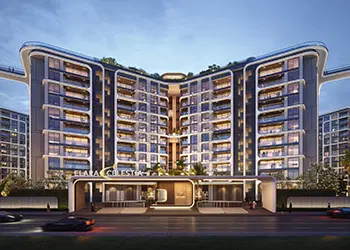
L&T Elara Celestia
- 3 & 4 BHK Apartments
- 1,091 - 3,100 Sq. Ft.
- Hebbal, Bengaluru
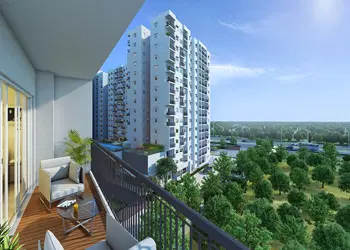
Godrej Avenues Bangalore
- 1, 2 & 3 BHK Apartments
- 1,025 - 1,721 Sq. Ft.
- Yelahanka, Bengaluru
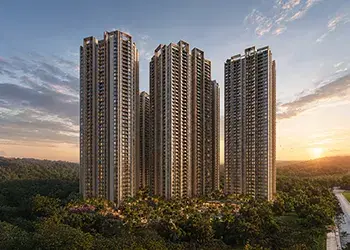
Godrej Vanantara
- 2, 3 & 4.5 BHK Apartments
- 1,295 - 2,915 Sq. Ft.
- Bannerghatta, Bengaluru
Residential property in Bangalore means any housing unit inside the Bengaluru urban and metropolitan area of Karnataka, held for living rather than commercial use. It covers apartments in gated projects, independent houses and villas, residential sites and plots, and resale flats in registered apartment owners' associations. Land is freehold, but civic recognition runs through the Khata system, and Khata classification decides whether a property can be registered, financed and resold without friction.
The listings on this page are concentrated in North Bangalore around Hebbal and Yelahanka, and in South Bangalore along the Bannerghatta corridor. Both belts are on metro alignments currently under construction, which is the single reason those two corridors have moved faster than the city average over the past three years.
Bangalore does not behave like Delhi NCR or Mumbai. There is no single central business district, so the city has five or six employment nodes and housing demand orbits whichever one a buyer works at. A flat is priced on commute time to Whitefield, Electronic City, the Outer Ring Road belt, Manyata or the airport corridor, far more than on distance to the city centre.
Configurations, carpet areas, current pricing and possession timelines are updated on each project page. Use the filters above to sort apartments, villas and plots for sale in Bangalore by budget, bedroom count, property type and developer.
Bangalore has been among the strongest performing residential markets in India since 2021, but the appreciation has been concentrated rather than uniform. Metro corridors and IT employment belts have pulled well ahead of the city average, and several localities have moved at multiples of it.
Three patterns hold consistently across the city, and they matter more than any single number.
Most of the appreciation happens before a metro line opens, not after. Corridors have re-rated on route announcement, again on construction start, and again as stations near completion. By the time a line is operational, a large share of the gain has already been taken. Sarjapur Road moved on planning announcements alone, years before any track was laid.
Metro adjacency carries a standing premium. Properties near operational stations trade above comparable non-metro locations in the same micro market, and a premium appears within walking distance of a confirmed station well before construction begins.
Employment node proximity outranks distance from the centre. Bangalore has no single business district, so a flat is priced on commute time to Whitefield, Electronic City, the Outer Ring Road belt, Manyata or the airport corridor. Two localities the same distance from the city centre can differ sharply in price because one is twenty minutes from a tech park and the other is an hour.
What this means practically is that a city average tells you very little here. Rates move corridor by corridor, and the corridor with a metro line under construction and an employment node at one end has behaved very differently from one with neither.
Ask our team for current rates on the specific project and locality you are considering, and for how that locality has moved against the corridor rather than against the city.
Bangalore offers five residential formats, and the format decides your Khata exposure, your approval chain and how easily a bank will fund the purchase.
Apartments in gated projects. The dominant format. Flats in Bangalore run from compact 1 BHK and 2 BHK stock in the outer belts through 3 BHK flats in the established corridors to 4 BHK apartments in the premium belts. Clubhouse, gym, covered parking and power backup are standard. Apartments in Bangalore are almost always A Khata where the project is approved, which is why banks fund them most readily.
Villas and row houses. Villas in Bangalore are concentrated in the north, along Sarjapur Road and in the outer east. Plot-backed, larger built-up areas, and a resale market that tracks land value rather than apartment supply.
Residential sites and plots. Plots in Bangalore are the most contested category in the city. BDA and approved layout sites carry A Khata. Sites in unapproved or revenue layouts frequently carry B Khata, which restricts home loan access and complicates resale. Plot buying here is a legal exercise before it is a financial one.
Independent houses. Older stock across the established localities, usually plot-backed with the same Khata considerations as sites.
Resale and ready-to-move flats. Completed projects across the city. No GST, no construction risk, and you inspect the actual unit. Verify the Khata classification, the e-Khata status and the encumbrance certificate before you pay anything.
Budget decides zone before it decides configuration in Bangalore, because the same money buys a different distance from an employment node depending on which corridor you choose.
| Budget Band | What It Typically Buys | Where to Look |
|---|---|---|
| Under ₹1 Crore | Compact 1 BHK and 2 BHK flats in Bangalore, mostly in outer belts and peripheral corridors. | Devanahalli belt, outer Sarjapur, Hoskote side, outer north, peripheral east. |
| ₹1 Crore to ₹2 Crore | 2 BHK and 3 BHK flats in established corridors, or larger units further out. | Yelahanka, Thanisandra, Bannerghatta corridor, Whitefield periphery, Electronic City belt. |
| ₹2 Crore to ₹4 Crore | 3 BHK and 4 BHK apartments in prime corridors, or villas in the outer belts. | Hebbal, inner Whitefield, Sarjapur Road, JP Nagar, Bellandur. |
| Above ₹4 Crore | Large-format apartments, penthouses and villas in the premium belts. | Koramangala, Indiranagar, Jayanagar, central and north premium pockets. |
Two things shift these bands. Metro proximity adds a premium in every one of them, and a project under construction generally falls a band below the equivalent ready unit. Ask our team for current pricing in the specific corridor you are considering, since rates move corridor by corridor and revise faster than any published table.
Bangalore is best understood as five zones, each anchored to a different employment node. Where you work should decide where you buy far more than where the marketing is loudest.
| Zone | Key Localities | Employment Anchor | Character |
|---|---|---|---|
| North Bangalore | Hebbal, Yelahanka, Thanisandra, Hennur, Devanahalli, Jakkur | Manyata Tech Park, airport corridor, aerospace and hardware park | Airport access, Blue Line alignment, strong villa and plot supply |
| East Bangalore | Whitefield, Marathahalli, Varthur, Hoodi, KR Puram, Old Madras Road | ITPL, Whitefield IT belt, Outer Ring Road parks | The largest IT housing catchment, deepest rental market |
| South Bangalore | JP Nagar, Jayanagar, Bannerghatta Road, Electronic City, Kanakapura Road, BTM Layout | Electronic City, Bannerghatta corridor | Established social infrastructure, Yellow and Pink Line access |
| South East | Sarjapur Road, HSR Layout, Koramangala, Bellandur, Haralur | Outer Ring Road tech belt, startup cluster | Highest demand density, heaviest traffic, premium pricing |
| West and Central | Rajajinagar, Malleshwaram, Vijayanagar, Nagarabhavi, Tumkur Road | Peenya industrial belt, central offices | Mature localities, Purple and Green Line access, limited new supply |
North Bangalore is the belt where infrastructure spending is most concentrated, and it is where the listings on this page are focused.
Hebbal, Yelahanka, Thanisandra and Devanahalli fall along the Blue Line metro alignment running from Central Silk Board to Kempegowda International Airport, a 58.19 km corridor following the Outer Ring Road through Hebbal and Yelahanka. The line is under construction and its opening date has moved more than once, so verify current status with BMRCL before you price a purchase on the assumption of imminent metro access.
The corridor also carries the airport itself, the aerospace and hardware park at Devanahalli, Manyata Tech Park as a large employment anchor, and better road width than most of the city. North Bangalore is the one belt where villas, plots and apartments are all available at scale in the same corridor.
The trade-off is commute. If you work in Whitefield, Electronic City or the Sarjapur belt, North Bangalore is a difficult daily commute until the Blue Line opens. Buy here for airport access, infrastructure horizon and space, not for a short commute to the eastern or southern tech belts.
Namma Metro is the most reliable single predictor of residential appreciation in Bangalore, and as of mid 2026 the network runs approximately 96.1 km across 83 stations.
| Line | Route | Status |
|---|---|---|
| Purple Line | East to West across the city | Operational |
| Green Line | North to South across the city | Operational |
| Yellow Line | RV Road to Bommasandra, 19.15 km with 16 elevated stations | Operational (Opened 10 August 2025) |
| Pink Line | Nagawara to Kalena Agrahara with interchanges at Jayadeva Hospital, MG Road, and Nagawara | Under Construction |
| Blue Line | Central Silk Board to Kempegowda International Airport via ORR, Hebbal, and Yelahanka (58.19 km) | Under Construction |
| Phase 3A Red Line | Hebbal to Sarjapur | Approved, in Planning |
The Bengaluru Suburban Rail Project runs alongside this across four corridors and will matter most to Devanahalli, Whitefield and the outer belts.
For a buyer the practical rule is straightforward. Verify construction status with BMRCL rather than relying on announcements, because opening dates in Bangalore have moved repeatedly, and price the commute you will actually have on possession day rather than the one on the alignment map.
Water is the second question to ask about any Bangalore property after price, and in the outer belts it is arguably the first.
The Bangalore Water Supply and Sewerage Board is the utility, and its jurisdiction covers the wider city area, comprising the core, the eight former urban local bodies and the 110 villages added to the municipal limits. Cauvery Stage V, a JICA funded scheme, extended piped Cauvery supply to those 110 peripheral villages, and the great majority of them have since received water.
What this means when you are choosing between projects:
- A Cauvery connection is the benchmark. Piped supply from BWSSB is more reliable and far cheaper per litre than the alternatives
- Karnataka has made Cauvery connections mandatory for apartment complexes within the applicable limits, so ask whether the project has applied, been sanctioned and been connected, which are three different answers
- Outside BWSSB coverage, projects run on borewells and private tankers. Borewell yield falls over time and tanker rates spike in summer, so a project that felt fine in December can be expensive by April
- Rainwater harvesting is a requirement, and a project that has implemented it properly rather than nominally is a genuinely better buy
- Sewage connection matters as much as supply. A project on a sewage treatment plant with no municipal sewer line has a recurring cost and a maintenance risk
Ask for the water source in writing, not the sales pitch. The honest answer is often a combination, and the ratio between Cauvery, borewell and tanker is what tells you what your maintenance bill will look like in a dry year.
This is the single most important thing to understand before buying property in Bangalore, and it has no equivalent in Delhi NCR.
Khata means account. It is the civic record maintained by your local authority identifying you as the property tax paying owner. Bangalore has three things a buyer needs to distinguish.
A Khata identifies a property as fully compliant with municipal regulations. Home loans, resale and building plan approvals proceed without friction.
B Khata identifies a property with pending approvals, layout issues, road access problems or building deviations. It is a tax record, not a certificate of compliance. B Khata properties face restricted home loan access and complicated resale, and buying one is a materially different transaction from buying an A Khata property.
e-Khata is the digital, Aadhaar verified version of the record, issued through the e-Aasthi platform. A verified e-Khata is now required for property registration through the Kaveri 2.0 system and for building plan approvals. Without it a registration will not process.
Khata is not proof of ownership. Your sale deed proves ownership. The Khata proves that civic records show you as the tax paying person. The encumbrance certificate, not the Khata, is what flags title disputes. All three are separate documents and you need all three.
B Khata to A Khata conversion is possible but conditional. From November 2025 a property must first obtain an e-Khata before an application to convert from B Khata to A Khata can be made, and eligibility depends on plot size, road access and document verification. Karnataka has run a reduced conversion fee window, and betterment charges apply on top.
Get the Khata classification and the e-Khata status in writing before you sign an agreement to sell, not after. This one check prevents the most expensive mistake available in this market.
Bengaluru's civic structure was reorganised in 2025, and which authority governs a property decides its approval chain, its Khata route and its service standard.
| Authority | What It Covers | What It Means for a Buyer |
|---|---|---|
| Greater Bengaluru Authority | The reorganised city administration replacing BBMP, with Bengaluru divided into five city corporations: North, South, East, West, and Central. | Existing Khata records and property tax history remain valid. Property applications in border zones may take longer to process. |
| BDA (Bangalore Development Authority) | BDA-planned layouts and allotted residential sites. | BDA sites generally carry an A Khata and are considered the most legally secure category of residential plots. |
| BMRDA | The extended Bengaluru Metropolitan Region outside the city limits. | Verify layout approvals carefully, as unapproved layouts in this region are a common source of B Khata-related issues. |
| Gram Panchayat Areas | Villages located outside corporation limits and approved layouts. | Offer lower entry prices, but buyers should verify approvals, water supply, drainage, and road connectivity before purchasing. |
Confirm the governing authority and the approval status of the layout in writing before you pay a booking amount. In the outer belts, marketing material often describes a project by its nearest well known locality rather than by its actual jurisdiction.
Guidance value is Karnataka's notified minimum property value for each locality, and it is the floor on which your stamp duty is calculated regardless of what you negotiate.
If a property sells below the guidance value, stamp duty is computed on the guidance value rather than the sale price. If the market price exceeds guidance value, duty is charged on the actual price. Guidance values vary enormously across the city, running considerably higher in the prime central and IT corridor localities than in the peripheral belts around Devanahalli, outer Sarjapur Road and Attibele.
Karnataka revises guidance values by notification, and a revision raises transaction cost without necessarily raising market price. Check the current notified value for your locality on the Kaveri portal before you finalise a budget rather than assuming last year's figure still applies.
Karnataka uses a slab based stamp duty structure rather than a flat rate, and unlike Delhi, Haryana and Maharashtra, there is no gender concession. A male buyer and a female buyer pay identical stamp duty on the same property.
| Property Value | Stamp Duty |
|---|---|
| Above ₹45 Lakh | 5% |
| ₹21 Lakh to ₹45 Lakh | 3% |
| Up to ₹20 Lakh | 2% |
On top of the base stamp duty, urban properties attract a cess calculated at 10 percent of the stamp duty and a surcharge of 2 percent. A registration fee applies separately, and Karnataka has revised it, so your total statutory cost is higher than the headline slab rate suggests.
Two things buyers get caught by:
- The slab boundary. Crossing the 45 lakh threshold changes the rate, so a small difference in assessed value can move your total outgo sharply
- Budgeting on the wrong base. Duty is charged on the higher of sale price or guidance value, and older online calculators often carry a superseded registration fee
Calculate your exact figure on the Kaveri portal or with the sub registrar before you commit, since Karnataka revises stamp duty, cess, surcharge and registration fee by notification. TDS above 50 lakh under section 194-IA and GST on under construction property apply as elsewhere, and are covered in our guide to [stamp duty and registration charges in India].
The core set is the K-RERA registration, the mother deed and title chain, the Khata certificate and extract with e-Khata verification, the encumbrance certificate, the approved plan and the occupancy certificate.
The Bangalore specific checks
- Khata classification, A or B, stated in writing
- Verified e-Khata reference, without which registration will not process on Kaveri 2.0
- Encumbrance certificate covering the relevant period, which is what surfaces title disputes
- Layout approval status and the governing authority, particularly for sites and outer belt projects
- BWSSB water connection status or the project's alternative water arrangement, which is a live issue in the outer belts
The standard set
- K-RERA registration number, verified on the Karnataka RERA portal before payment
- Mother deed and the chain of title, with an advocate's search report
- Sale deed, and the sale agreement with carpet area stated
- Sanctioned building plan and commencement certificate
- Completion certificate and occupancy certificate
- Property tax paid receipts up to date
- Apartment owners' association formation and handover status on resale
- Encumbrance and no dues position from any lender holding the property
- Parking allotment recorded in writing
An occupancy certificate confirms the building was completed as sanctioned and is legally fit for occupation, and Bangalore has a long record of projects occupied without one.
Buyers move in on possession, assume the paperwork will follow, and discover later that it did not. The consequences are real. A missing occupancy certificate complicates resale, can hold up a Khata, creates exposure if the deviation is ever acted on, and makes some lenders decline funding on the resale.
Three related items to check on any completed or nearly completed project:
- Occupancy certificate. Issued, applied for, or neither. Get the answer in writing and ask to see the document
- Deed of declaration and apartment association formation. Under the Karnataka framework for apartment ownership, the developer executes a deed of declaration and hands over common areas to the association. Where this has not happened, the association cannot manage the property properly and resale becomes harder to explain to a buyer
- Common area and corpus handover. Ask whether the sinking fund and maintenance corpus have actually been transferred, and what the current maintenance rate per square foot is
On a resale purchase these three questions surface most of the problems that exist in a Bangalore apartment. Ask them before the advance, not after.
Ready to move flats in Bangalore carry no construction risk and no GST but cost more per square foot. Under construction projects cost less and offer choice of unit, with delivery timeline risk attached.
| Factor | Ready-to-Move Flats in Bangalore | Under-Construction Projects in Bangalore |
|---|---|---|
| Price per sq. ft. | Higher | Lower at Launch |
| GST | Not Applicable once the Occupancy Certificate is Issued | Applicable until the Occupancy Certificate is Issued |
| Khata Position | Verifiable Today | Depends on Approvals Being Completed |
| Water Source | Can Be Verified Today, Including Tanker Dependency | Committed on Paper, Not Yet Tested |
| Unit Choice | Limited to Remaining Inventory | Full Choice of Tower, Floor, and Facing |
| Rental Income | Immediate | Starts After Possession |
| Key Checks | Occupancy Certificate, Khata, e-Khata, Association Handover, and Maintenance Rate | K-RERA Registration, Project Approvals, and Committed Possession Date |
| Recourse if Things Go Wrong | Limited, as the Property Is Purchased "As Is" | K-RERA Complaint Against the Registered Possession Date |
Bangalore tilts the calculation towards ready to move more than most Indian cities, because Khata classification, occupancy certificate and water source can all be verified on a completed property and can only be promised on one that is not built yet. Investors chasing entry price still take under construction, but only in K-RERA registered projects from developers with a delivery record in the same segment.
Bangalore has the deepest and most liquid rental market in India, because its tenant base is large, salaried, young and highly mobile between employment nodes.
Demand concentrates around the tech belts: Whitefield and Marathahalli for the eastern parks, Bellandur, HSR Layout and Sarjapur Road for the Outer Ring Road cluster, Electronic City for the southern belt, and Thanisandra and Hebbal for Manyata. Compact 1 and 2 BHK stock rents fastest near these nodes. Larger 3 and 4 BHK units rent to families and senior professionals and turn over more slowly but at higher absolute rents.
Two things shape yield here more than in other Indian cities. Proximity to a specific employment node matters far more than proximity to the centre, because there is no single centre. And metro access is now a rental differentiator in its own right, not only a resale one, since commute time is the dominant complaint of the Bangalore tenant.
All three are technology driven, freehold markets with comparable entry pricing, and they differ mainly in transaction cost, regulatory clarity and infrastructure stage.
| Factor | Bangalore | Pune | Hyderabad |
|---|---|---|---|
| Land Ownership | Freehold | Freehold | Freehold |
| Regulator | K-RERA | MahaRERA | TG-RERA |
| Stamp Duty Structure | Slab-based; 5% above ₹45 lakh, no gender concession | 7% in urban areas; 6% for women | As prescribed by the Telangana Government |
| Main Due Diligence Issue | Khata Classification and e-Khata | Deemed Conveyance and Jurisdiction | Layout Approvals |
| Employment Base | Largest Technology Hub in India | IT and Manufacturing | IT and Pharmaceutical Industries |
| Metro Network | Approximately 96.1 km with 83 Stations | Two Lines Operational; Third Line Opening | Operational Metro Network |
| Rental Market Depth | Deepest Among the Three | Strong | Strong |
Bangalore carries the highest transaction friction of the three because of Khata, and the deepest rental market. Buyers who do the legal work properly get the better market. Buyers who skip it get the worse one.
Bangalore is straightforward to finance where the property is A Khata and the project is K-RERA registered. It is difficult to finance where it is not.
Most lenders decline or heavily restrict funding on B Khata properties, which is the practical reason the classification matters so much. Plots and sites are funded under a separate plot loan product at lower loan to value and shorter tenure, and lenders scrutinise layout approval carefully. Get a pre approved sanction and a legal opinion on the Khata position before you commit to a site purchase.
NRIs and OCI cardholders can buy residential property in Bangalore without RBI approval, paying through NRE, NRO or FCNR accounts. Agricultural land, plantation property and farmhouses are outside this permission, which matters here because some outer belt sites are on land whose conversion status needs verifying. A Power of Attorney executed abroad must be signed before the Indian Embassy or Consulate, or notarised and apostilled, then stamped in India. Full details are in our guides to [home loans for property in India] and [NRI buying property in India].
- Freehold land, but civic recognition runs through the Khata system
- A Khata is fully compliant, B Khata restricts loans and resale
- Verified e-Khata now required for registration through Kaveri 2.0
- Khata is not proof of ownership, the sale deed is
- Stamp duty is slab based, 5 percent above 45 lakh
- No gender concession on stamp duty in Karnataka
- Guidance value sets the minimum registration value
- BBMP reorganised into the Greater Bengaluru Authority in 2025
- Namma Metro runs approximately 96.1 km across 83 stations
- Most metro driven appreciation happens before a line opens
- Cauvery piped supply is the water benchmark, borewell and tanker are the fallback
- Occupancy certificate, deed of declaration and association handover decide resale ease