Residential Properties Mumbai
Residential property in Mumbai means housing inside Greater Mumbai under the Brihanmumbai Municipal Corporation, and across the wider Mumbai Metropolitan Region that takes in Thane, Navi Mumbai, Mira Bhayandar and the Vasai Virar belt. It is the costliest of India’s seven largest housing markets on average capital value, and also the largest by transaction volume. The average residential price across the Mumbai Metropolitan Region reached 17,780 rupees per square foot in the second quarter of 2026, up 4 percent over the year on Anarock’s figures, while Mumbai city under BMC limits recorded 80,221 property registrations in the first half of 2026, the strongest first half since 2013 on Knight Frank India’s reading of state registration data. Almost every new project inside the island city and the older suburbs is a redevelopment of an existing building rather than construction on fresh land, which is why title, conveyance and occupancy certificate matter more to a Mumbai buyer than they do anywhere else in India. This page carries verified residential properties in Mumbai across apartments, villas and penthouses, each checked for MahaRERA registration, approval status and title position before it appears.
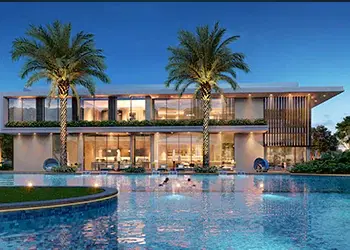
Emaar Villas Casa Venero
- 4 & 5 BHK Villas
- 5,400 - 6,300 Sq. Ft.
- Alibag, Mumbai
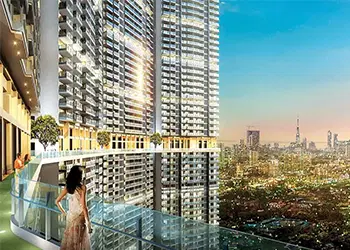
L&T Crescent Bay Mumbai
- 2, 3 & 4 BHK Apartments
- 1,320 - 3,910 Sq. Ft.
- Parel, Mumbai
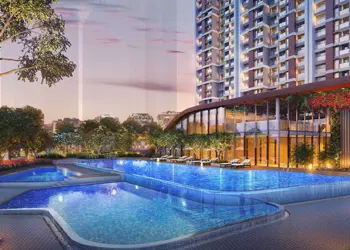
Shapoorji Pallonji Northern Lights
- 2 & 3 BHK Apartments
- 711 - 1,300 Sq. Ft.
- Thane, Mumbai
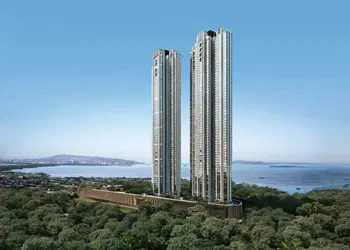
Piramal Aranya Byculla
- 2, 3 & 4 BHK Apartments
- 961 - 1,272 Sq. Ft.
- Byculla, Mumbai
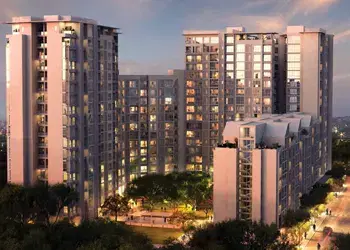
Godrej Trees Mumbai
- 1, 2, 3 & 4 BHK Apartments & Penthouses
- 480 - 2,385 Sq. Ft.
- Vikhroli, Mumbai

Godrej Sky Mumbai
- 2, 3 & 4 BHK Apartments
- 955 - 2,242 Sq. Ft.
- Byculla, Mumbai
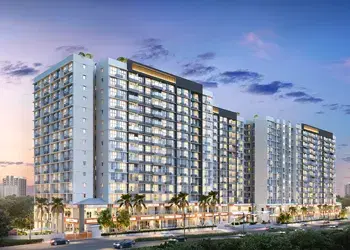
Godrej Urban Park Chandivali
- 1, 2 & 3 BHK Apartments
- 431 - 944 Sq. Ft.
- Powai, Mumbai
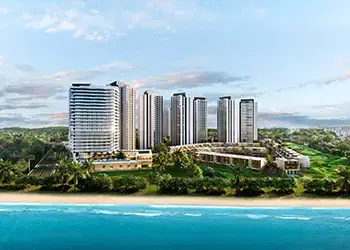
Sunteck Beach Residences
- 2 & 3 BHK Apartments
- 691 - 1,375 Sq. Ft.
- Vasai, Mumbai
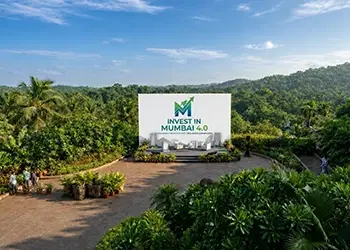
Birla Mrida Plots Boisar
- Plots null
- 1200 - 9000 Sq. Ft.
- Boisar, Mumbai
Mumbai is not one market and treating it as one is the most expensive mistake a buyer makes here. A flat in Byculla, a flat in Thane and a villa in Alibag are three different assets, with different price curves, different approval chains and different reasons to own them. The single citywide average rate you see quoted in headlines hides all of that.
The listings on this page reflect that spread. They sit across South Central Mumbai in Parel and Byculla, the central suburbs in Vikhroli and Powai, Thane, the peripheral western belt at Vasai, and the Alibag second-home market in Raigad. Ticket sizes on the page run from roughly 1 crore to 9 crore, with configurations from compact 1 BHK formats at 431 square feet up to 4 and 5 BHK villas above 5,400 square feet.
What holds the whole market together is land scarcity. Greater Mumbai has almost no vacant developable land left, so new supply has to come from redevelopment, reclaimed and industrial land, or by pushing outward into Thane, Navi Mumbai and the Vasai-Virar corridor. That structural fact drives everything else on this page: why prices hold up through weak quarters, why possession timelines slip, and why the peripheral markets are growing faster than the core.
Configurations, carpet areas, current pricing and possession timelines are updated on each project page. Use the filters above to sort apartments, villas, penthouses and plots for sale in Mumbai by budget, bedroom count, property type and developer.
When a price is quoted for Mumbai, the first question is which Mumbai. The Mumbai Metropolitan Region splits into seven distinct zones, and the gap between the top and bottom of that list is wider than the entire price range of most Indian cities. Knowing which zone a listing sits in tells you more about its price and its risk than the developer name does.
| Zone | Representative localities | Character |
|---|---|---|
| South Central Mumbai | Byculla, Worli, Parel, Lower Parel, Prabhadevi, Girgaon, Tardeo, Mahalakshmi | The old mill land belt, now the redevelopment and luxury high-rise core. Strongest launch growth in MMR in 2025. |
| Mumbai Western Suburbs | Bandra, BKC, Andheri, Vile Parle, Jogeshwari, Goregaon, Malad, Kandivali, Borivali, Dahisar | The deepest end-user market in the city. Employment, schools and airport access. |
| Mumbai Central Suburbs | Sion, Kurla, Chembur, Wadala, Powai, Vikhroli, Ghatkopar, Bhandup, Kanjurmarg, Mulund | Better value per square foot than the west, with metro and Eastern Freeway access. |
| Thane | Thane West, Ghodbunder Road, Pokhran Road, Kolshet Road, Majiwada, Kasarvadavali | A large market in its own right, not a suburb. Compact formats dominate new supply. |
| Navi Mumbai | Vashi, Airoli, Ghansoli, Kharghar, Kamothe, Panvel, Ulwe, Taloja, Kalamboli | Planned sectors under CIDCO, now anchored by an operational international airport. |
| Peripheral Central Suburbs | Kalyan, Dombivli, Ambernath, Badlapur, Bhiwandi, Neral, Shahapur | The volume market. Led MMR in both launches and sales in 2025. |
| Peripheral Western Suburbs | Mira Road, Bhayandar, Naigaon, Vasai, Nala Sopara, Virar, Palghar, Boisar | The lowest entry pricing inside MMR, on the Western Railway line. |
Alibag sits outside all seven. It is in Raigad district and behaves as a weekend and second-home market driven by Mumbai buyers rather than as part of the MMR housing cycle. Price it as a lifestyle asset with thin resale liquidity.
There is no single best area in Mumbai. There is only the right trade between commute, ticket size and how long you intend to hold. The table below maps that trade for the belts where residential supply is actually available in 2026.
| Belt or locality | What it offers | Best suited to |
|---|---|---|
| Worli, Parel, Lower Parel, Prabhadevi | The luxury and premium redevelopment core, Coastal Road and Metro Line 3 access, walkable to the central business districts | Premium upgraders and buyers who work in South Mumbai or Lower Parel |
| Byculla | Central location at a lower rate than Worli or Parel, heavy redevelopment pipeline, Line 3 station nearby | Buyers who want a central address and will accept an area still in transition |
| Bandra West, Khar, Juhu | Long-established premium residential addresses, sea access, schools | End users at the top of the market, long-horizon holders |
| BKC and Kalina | A major concentration of corporate and financial offices, Line 3 station, bullet train terminus planned | Rental yield investors and senior professionals working in BKC |
| Andheri West and East, Goregaon, Malad | The widest supply and resale depth in the city, Lines 1, 2A, 7 and 3 all reachable | First-time buyers in Mumbai proper, families needing schools and hospitals |
| Powai, Chandivali, Vikhroli | Planned township living, IT and corporate employment inside the belt, compact to mid formats | Working professionals, rental investors, buyers priced out of the west |
| Mulund, Bhandup, Ghatkopar | Metro corridor and larger layouts for the money, with the Goregaon-Mulund Link Road in progress | Value-focused end users wanting space inside city limits |
| Thane West and Ghodbunder Road | Large-scale new supply, strong price growth in recent years, road and metro projects in progress | Budget and mid-segment buyers, and investors accepting a longer commute |
| Navi Mumbai: Kharghar, Panvel, Ulwe, Taloja | Airport proximity, Atal Setu access, planned sectors, the lowest entry ticket for a planned-city address | Long-horizon investors and buyers working in Navi Mumbai or near the airport |
| Mira Road, Vasai, Virar, Naigaon | The most affordable formal housing in MMR, on the Western Railway line, with the Coastal Road extension reported as far as Bhayandar | First-time buyers on a tight budget who accept the current commute |
| Alibag and the Raigad coast | Villas and plots, Atal Setu has cut the drive sharply, weekend use | Second-home buyers who already own their primary residence |
Mumbai is an apartment market. Everything else is a niche, and the niches behave very differently from flats.
Apartments and group housing flats. The format that makes up nearly all supply. Ranges from 431 square foot compact units in the central suburbs to 3 and 4 BHK apartments running past 3,900 square feet in Parel. Gated, with clubhouse, parking and increasingly with a podium garden because there is no ground-level space to give.
Penthouses and duplexes. The top floors of premium towers, usually released late in a project and priced well above the tower average. Resale is slow because the buyer pool is small, so buy these to live in rather than to trade.
Villas and low-rise homes. Almost non-existent inside Greater Mumbai. The villa market has moved to Alibag, Karjat, the Raigad coast and pockets of Thane and Navi Mumbai. Larger built-up areas, private plots and a resale market that tracks land rather than apartments.
Residential plots. Not a Mumbai city product at all. Available through CIDCO in Navi Mumbai, through the NAINA town planning schemes around the airport, and privately in Raigad and Palghar. Full construction control and the strongest long-term land appreciation, but the heaviest diligence, particularly on the title chain and on whether the land is agricultural or has been formally converted.
Redevelopment sale component flats. A large share of new launches inside the city. The developer rebuilds an existing society, returns new flats to the original members, and sells the additional flats built on the extra floor space index. These are worth understanding properly, and they get their own section below.
Resale and ready-possession flats. Lower price than an equivalent new launch, no construction risk, and no GST because GST does not apply once the occupancy certificate is issued. The trade is that you inherit the building's history, so society dues, conveyance status and structural condition all need checking before you pay anything.
The most defensible single number for the region is Anarock’s: the average residential price across the Mumbai Metropolitan Region stood at 17,780 rupees per square foot in the second quarter of 2026, a 4 percent rise over the same quarter of 2025. Two things about that figure matter more than the figure itself.
First, it is a regional average across all seven zones, so it sits far below what a flat in Bandra or Worli actually costs and above what one in Virar costs. Second, it is quoted as basic selling price against built-up area. Since MahaRERA only recognises carpet area as the unit of sale, the carpet area equivalent of any built-up area rate is meaningfully higher. If someone hands you a rate, ask which area basis it uses before you compare anything.
The other honest reading of 2026 pricing comes from the transaction side. Mumbai city registered 80,221 properties in the first half of 2026, up 6 percent year on year, while stamp duty collections rose only 4 percent to 6,968 crore rupees. Knight Frank India read that gap as a moderation in average transaction values, with demand broadening across buyer segments rather than concentrating in the highest-value deals. In plain terms: more people are buying, and the average deal is not getting more expensive as fast as the headlines suggest.
Here is the five-year record for the Mumbai Metropolitan Region, taken from Anarock’s annual capital value series on basic selling price against built-up area, with the current quarter added.
| Year | MMR Average Rate | Change Over the Year | What Was Happening |
|---|---|---|---|
| 2020 | 10,610 rupees per sq ft | Flat | Pandemic year, no growth |
| 2021 | 11,092 rupees per sq ft | Up 4 percent | Recovery aided by the temporary stamp duty cut |
| 2022 | 11,890 rupees per sq ft | Up 7 percent | Demand building, input costs rising |
| 2023 | 13,700 rupees per sq ft | Up 15 percent | Launch peak of 1.57 lakh units in MMR |
| 2024 | 16,600 rupees per sq ft | Up 21 percent | Peak appreciation across Indian metros |
| 2025 | 17,350 rupees per sq ft | Up 5 percent | Growth returns to single digits, sales outpace launches |
| Q2 2026 | 17,780 rupees per sq ft | Up 4 percent year on year | Moderate, infrastructure-led appreciation |
That is a rise of roughly 64 percent from 2020 to the end of 2025, and about 68 percent from 2020 to the middle of 2026. It is a genuinely strong five-year record. It is also front-loaded. Two years, 2023 and 2024, produced most of it. The last eighteen months have run at 4 to 5 percent.
Anyone selling you Mumbai property on the strength of 2024 numbers is quoting a year that has already passed. Anyone telling you the market has stalled is ignoring that registrations in July 2026 hit 13,617, the highest July figure in over fourteen years, with stamp duty collections of 1,223 crore rupees. Both facts are true at once. The volume is there, the price growth has normalised, and that combination is a healthier market to buy into than 2024 was.
Mumbai is both an employment story and an infrastructure story, which is unusual in India and is the main reason its prices hold through weak quarters.
- Land scarcity. Greater Mumbai has effectively run out of vacant developable land, so supply depends on redevelopment and on outward expansion. Constrained supply is the floor under city prices.
- Employment inside the city. Financial services, corporate headquarters, media, entertainment, legal and consulting are all concentrated inside Mumbai rather than in a satellite town. This is what Mumbai has and most Indian markets do not.
- Mumbai Metro Line 3, fully operational since October 2025. A 33.5 kilometre underground corridor with 27 stations from Cuffe Parade to Aarey, cutting the airport-to-South Mumbai journey to roughly 45 minutes from close to two hours.
- Navi Mumbai International Airport, operational since December 2025. A second international gateway for the region, with international flights beginning in July 2026.
- Atal Setu, the Mumbai Trans Harbour Link. The roughly 22 kilometre sea bridge opened in January 2024, connecting Sewri to the Navi Mumbai side and pulling Panvel, Ulwe and the Raigad coast much closer to the city.
- The Coastal Road. The southern phase from Marine Lines to Worli opened in March 2024. The Versova to Dahisar and Bhayandar extension is under construction.
- Redevelopment policy and higher floor space index. Enhanced FSI in redevelopment has made rebuilding old societies commercially viable, which is what is generating premium inventory in land-locked micro markets.
- Cheaper money. The RBI cut the repo rate by 125 basis points through 2025 and has held it at 5.25 percent since, most recently on 5 August 2026. Floating home loan rates sit near multi-year lows, though the rate any borrower is offered depends on the lender and the credit profile.
- A frozen valuation floor. Ready reckoner rates were not revised for FY 2026–27, so the government valuation base under stamp duty has not moved this year.
The counterweight is affordability and inventory. Unsold stock across India’s top seven cities rose to about 6.01 lakh units by the end of the first quarter of 2026, up 7 percent year on year, with new launches outpacing sales for the first time since the post-pandemic recovery. MMR’s own inventory overhang moved up to 17 months at the end of 2025 from 14 months in 2024. That is still healthy by historical standards, and far better than the 55 months MMR carried in 2020, but the direction has changed. A buyer in 2026 has more negotiating room than a buyer in 2024 did.
Mumbai’s metro and road network changed shape decisively between January 2024 and October 2025, and this is the single set of facts that should influence where you buy.
- Line 3, the Aqua Line, is fully operational. The final stretch from Acharya Atre Chowk to Cuffe Parade opened on 8 October 2025, completing 33.5 kilometres and 27 stations from Cuffe Parade to Aarey JVLR. Twenty-six of the 27 stations are underground.
- It serves the addresses that matter. Cuffe Parade, Churchgate, CSMT, Worli, Dadar, Siddhivinayak, BKC, the domestic and international airport terminals, Marol, SEEPZ and Aarey. Phase 1 from BKC to Aarey began commercial operations in October 2024, while Phase 2A from BKC to Acharya Atre Chowk opened in May 2025.
- Line 1, the Blue Line. Versova to Ghatkopar, operational, interchanging with Line 3 and the suburban rail network.
- Lines 2A and 7. The Dahisar to Andheri West and Dahisar East to Gundavali corridors, serving the western suburbs.
- Lines 2B, 4, 5, 6 and 9 are under construction. These will extend coverage into the eastern suburbs, Thane and the Mira-Bhayandar belt.
The practical rule is the same one that applies in every metro city. A station that is operating is priced in. A station that is announced is not, and buying ahead of it is a timing bet that should be sized as one. Before you pay a premium for future metro access, ask for the corridor name, the station name and the current construction status, and check it yourself rather than taking a brochure map at face value.
If you buy a new flat in the island city or the older suburbs in 2026, there is a strong chance you are buying into a redevelopment. Understanding how these work is not optional here in the way it might be in a city with open land.
The structure is straightforward. An old cooperative housing society agrees to have its building demolished and rebuilt. The developer gives the existing members new flats, usually larger than what they had, and in exchange gets to build and sell additional flats using the extra floor space index available for redevelopment. Those additional flats are the free-sale component, and that is what appears on the market.
The advantages are real. You get a new building at an established address with existing infrastructure, schools and transport, in a location where no fresh land was available. This is why buyers have been favouring redevelopment in settled neighbourhoods over new construction on the outskirts.
The risks are specific, and they are worth knowing before you book:
- Society consent and litigation. A dissenting group of members can stall a project for years. Ask whether consent is documented and whether any member has litigation pending.
- Timeline slippage. MahaRERA has been ordering developers to pay interest to buyers for delayed possession in redevelopment projects. That remedy is used often enough to tell you how common the delays are.
- Approval chain length. A redevelopment needs BMC building plan approval, a commencement certificate, and where the land involves MHADA, SRA or a collector lease, a no-objection certificate from that body too. Each is a point of delay.
- Existing tenancies. Mumbai has a large stock of rent-controlled and tenanted property, the pagdi system among it. Confirm in writing that no tenant, licensee or occupant retains rights over the flat you are buying.
- Developer execution record, not developer brand. Ask which redevelopment projects this developer has actually completed and handed over, and go look at one.
Three technical points cause more disputes in Mumbai than anything else, and all three are checkable before you pay.
Carpet area is the only legal unit of sale. Under RERA, carpet area means net usable floor area within the walls. Built-up area adds wall thickness. Saleable or super built-up area adds a share of lobbies, lifts and common areas, and it has no legal standing in the agreement. A developer may market on saleable area, but the agreement and the MahaRERA filing must state carpet area, and those two figures must match. Compare the number in the agreement against the number on the portal, not against the brochure.
Occupancy certificate and completion certificate are not the same thing. The completion certificate confirms the building was constructed per sanctioned plans. The occupancy certificate confirms it is fit to be occupied and clears the way for utility connections. Never take possession of a ready flat without sighting the occupancy certificate. Its absence can restrict utilities, block resale and complicate a home loan. It also determines your GST liability, because GST does not apply once the occupancy certificate is issued.
Conveyance decides whether your society owns its land. A conveyance deed transfers the land and building title from the promoter to the housing society. Many Mumbai societies never received it. Under the MOFA rules, where no period was agreed, the promoter should convey within four months of the society being registered. For a RERA-registered project, the MahaRERA rules point to three months from the occupancy certificate. Where the promoter fails, members can apply to the Competent Authority, the District Deputy Registrar of Cooperative Societies, for deemed conveyance. If you are buying a resale flat, ask whether the society has conveyance or deemed conveyance, and if it does not, ask where the application stands.
The standard checklist applies, plus the Mumbai-specific checks that determine whether you end up with a clean, registrable and resaleable title.
The Mumbai-specific checks
- MahaRERA registration verified on MahaCRITI, which since 11 May 2026 is the only portal in use. MahaRERA Order 65A/2026 closed the legacy MahaRERA 1.0 system, and any application a developer had pending there was administratively closed. If a project is not on MahaCRITI, do not book.
- Quarterly progress reports should be current on the portal. If the last filing is more than 90 days old, ask why.
- Project status should not show as lapsed, revoked or penalised. MahaRERA publishes those lists.
- Litigation and recovery warrants against the promoter should be checked on the portal.
- For a ready flat, verify the occupancy certificate. For an under-construction property, verify the commencement certificate and sanctioned plans.
- For any resale purchase, check the conveyance or deemed conveyance status of the society.
- Verify no-objection certificates from MHADA, SRA or CIDCO where the land history requires them.
- Check whether the building falls within a Coastal Regulation Zone, which can restrict what can be built or rebuilt.
- Conduct an encumbrance search on the IGR Maharashtra portal to confirm that the property is not already mortgaged or registered to someone else.
- Confirm in writing that there are no tenant, licensee or occupant rights affecting the property.
The standard set
- Registered agreement for sale. A promoter cannot lawfully take more than 10 percent of the cost without one, so treat any request for a larger soft-launch payment as a warning.
- Title chain and the developer's right to develop the land.
- Carpet area in the agreement matched against the MahaRERA filing and the sanctioned plan.
- Possession date, penalty clause and payment plan written into the agreement rather than promised verbally.
- Society registration certificate, share certificate, bye-laws and minutes for a resale flat, with the minutes reviewed for redevelopment proposals and disputes.
- Property tax receipts and society no-dues certificate.
- Parking allotment recorded in writing with the slot number and wing.
- Structural defect liability, which is five years from possession under Section 14 of the RERA Act.
- Sanctioned electricity load, water and drainage connection status.
Mumbai stamp duty is 6 percent for a male buyer and 5 percent for a woman buying in her sole name. Both figures already include the 1 percent metro cess, so do not add it again.
| Item | Rate in Mumbai |
|---|---|
| Stamp duty, male buyer | 6 percent, made up of 5 percent base duty plus 1 percent metro cess |
| Stamp duty, woman buying in her sole name | 5 percent, made up of 4 percent base duty plus 1 percent metro cess |
| Stamp duty, joint purchase including a male buyer | 6 percent |
| Registration fee | 1 percent of value, capped at ₹30,000 where the value exceeds ₹30 lakh |
| Basis of calculation | The higher of the agreement value or the ready reckoner rate for that zone |
| GST, under-construction flat | 5 percent, or 1 percent for a unit qualifying as affordable housing, both without input tax credit |
| GST, ready flat with occupancy certificate | Nil |
| TDS under Section 194-IA | 1 percent where consideration is ₹50 lakh or more |
The women's concession is worth 1 percent of the property value, not 1 percent of the duty. On a ₹3 crore flat, it saves ₹3 lakh. The earlier restriction that prevented a woman from selling within fifteen years without losing the benefit has been removed. The concession applies to residential property and not to commercial property. However, interpretations of how it works in a joint purchase can differ between sub-registrar offices, so confirm locally.
The ready reckoner rate, formally the Annual Statement of Rates, is the government's minimum valuation for each of Mumbai's zones. Duty is charged on the higher of that value or your agreement value. Maharashtra held these rates unchanged for FY 2026-27, with no revision on 1 April 2026, after Mumbai saw a 3.39 percent rise the previous year. A freeze holds the valuation floor steady rather than lowering your cost, and if you negotiate a price below the reckoner rate, you will still pay duty on the higher official figure.
Budget stamp duty, registration and GST as a separate line from your down payment. On a ready ₹2 crore flat bought by a male buyer, duty and registration alone come to roughly ₹12.3 lakh. On an under-construction flat of the same value, add 5 percent GST on top of that. Full working is in our guide to stamp duty and registration charges in Mumbai, and financing is covered in our guide to home loans for property in Mumbai.
Mumbai's rental market is driven by employment rather than education or industry, which is what separates it from most other Indian markets. Financial services in BKC and Lower Parel, corporate headquarters across the city, media in Andheri and Goregaon, and technology and consulting in Powai and Vikhroli all generate steady tenant demand. The flow of professionals moving to the city keeps that demand resilient through market cycles.
The number that matters, though, is the yield, and it is where many Mumbai investment cases quietly fall apart. Residential rental yields in Indian metros sit in a band of roughly 2 to 6 percent, and Mumbai sits at the lower end of that range because capital values are so high relative to rents. Against a floating home loan, which in 2026 is quoted anywhere from the low 7 percent range to above 9 percent depending on the lender and borrower's credit profile, a leveraged residential purchase in Mumbai runs at negative carry. The rent does not cover the interest.
None of that makes it a bad purchase. It makes it a capital appreciation purchase where rent covers part of the carrying cost, and it should be modelled on that basis. If income is your objective, model the actual yield on the actual flat at the actual rent an agent will commit to before you count on it.
Mumbai suits some buyers very well and others badly. The difference is mostly about investment horizon and cash position rather than budget.
- End users with a horizon of seven years or more. Transaction costs of 6 to 8 percent on entry, plus capital gains and brokerage on exit, require several years of appreciation just to be recovered. At the current 4 to 5 percent annual growth rate, a short hold can lose money.
- Buyers who can pay duty and taxes from separate funds. If stamp duty comes out of your down payment, you are overextended before you start.
- Anyone whose work genuinely requires Mumbai. The city's employment concentration is the whole point. If you have to be here, owning here can make more sense than renting here over a sufficiently long holding period.
- Women buying in their sole name. The 1 percent concession represents a direct saving, and the previous fifteen-year restriction has been removed.
- Redevelopment buyers who will actually do the legal work. An established location, a new building and a discount to comparable ready stock can make this trade attractive if the diligence is done properly.
- Buyers who prefer a completed project to a promise. 2026 is a good year for this because Line 3 is running, Atal Setu is open and the airport is operating. You can buy proximity to infrastructure that already exists rather than paying for a future plan.
- Second-home buyers who already own their primary residence. The Alibag and Raigad coast market can make sense as a lifestyle purchase funded from surplus capital, provided thin resale liquidity is accepted upfront.
- Anyone hoping to flip within two or three years. MMR price growth has been 4 to 5 percent for eighteen months, unsold inventory has risen, and launches outpaced sales nationally in early 2026. The 21 percent growth seen in 2024 is not the market you are buying into today.
- Buyers stretching to their maximum loan eligibility. The 6 to 8 percent in duty, registration and GST sits outside the loan and has to be paid in cash. So does any shortfall if the bank values the flat below your agreement price.
- Yield-first investors. A gross yield at the bottom of the 2 to 6 percent metro range, against a loan costing more than that, creates negative carry. There are better income-focused assets.
- Anyone unwilling to pay for independent legal diligence. In a market shaped by redevelopment, leasehold land, MHADA and SRA histories, and rent-controlled tenancies, a title opinion from your own advocate is not a luxury. A cheap over-the-phone verification can create false confidence.
- Buyers who cannot get an occupancy certificate for a ready flat. Walk away. This is not a paperwork detail to be sorted out later.
- Buyers paying a premium for infrastructure with no completion date. A station or road with no announced timeline is a plan. Price the commute you will actually have.
- Anyone booking in a project that is not on MahaCRITI. Since 11 May 2026, that is the only portal. Absence from it is a stop signal, not a technicality.
- Compare on carpet area, or you are not comparing anything. Two quotes based on different area measurements can differ by 25 to 30 percent for an identical flat.
- Get the possession date, penalty clause and payment schedule into the registered agreement. Nothing said in a sales lounge survives a dispute.
- Do not pay more than 10 percent before the agreement for sale is registered. A promoter who asks for more is breaking the rule.
- Read the society minutes before a resale purchase. Redevelopment proposals, disputes and pending litigation often appear there before they show up anywhere else.
- Check the parking allotment in writing, with the slot number and wing. Parking disputes are among the most common society-level disputes in Mumbai.
- Confirm which GST scheme applies to a long-running project. A handful of projects launched before April 2019 still fall under the older rates with input tax credit.
- Price in the monsoon. Ask about flooding history on the road and in the basement, and ask the neighbours rather than the developer.
- Factor in maintenance. Premium Mumbai towers carry high monthly outgoings, and on a large flat, that is a material ongoing cost.
- If you are an NRI, check the FEMA position on the property type. Plan for TDS on any future sale and get repatriation rules confirmed before you buy rather than after.
- Recheck every rate and rule on this page against the official source before you sign. Stamp duty, ready reckoner rates and GST can all change by notification.
- The costliest of India's seven largest housing markets on average capital value, and the largest by volume.
- MMR average residential rate of ₹17,780 per square foot in Q2 2026, up 4 percent year on year, based on basic selling price against built-up area.
- 80,221 property registrations in Mumbai city in the first half of 2026, the highest first-half figure since 2013.
- 13,617 registrations in July 2026, the highest July figure in more than fourteen years, with ₹1,223 crore in stamp duty.
- Stamp duty of 6 percent for men and 5 percent for women buying solely, both including the 1 percent metro cess.
- Registration fee capped at ₹30,000 for property values above ₹30 lakh.
- Ready reckoner rates held unchanged for FY 2026-27.
- MahaRERA registration is mandatory for projects above 500 square metres or more than eight units.
- MahaCRITI has been the only RERA portal since 11 May 2026.
- Carpet area is the only legal unit of sale.
- GST is nil on a ready flat with an occupancy certificate and 5 percent on an under-construction flat.
- Metro Line 3 has been fully operational from Cuffe Parade to Aarey since October 2025.
- Navi Mumbai International Airport has been operating domestically since December 2025 and internationally since July 2026.
- Atal Setu has been open since January 2024, while the southern phase of the Coastal Road has been open since March 2024.
- Almost all new supply inside the city comes from redevelopment.
- MMR inventory overhang stood at 17 months at the end of 2025, up from 14 months.
- Rental yields sit at the lower end of the 2 to 6 percent Indian metro range.