Residential Properties Goa
Goa is the only state in India where a registered sale deed does not, by itself, give you clean possession. Two laws that exist nowhere else, the Mundkar Act and the Agricultural Tenancy Act, allow a third party to hold rights over land you have just bought, and those rights survive the sale. Add a Portuguese era record system, a conversion order requirement before you can build, and coastal zone rules that decide how close to the water anything can stand, and you have a market where the legal work matters more than the location. This page carries verified residential properties in Goa across apartments, villas and plots, each checked for Goa RERA registration, Form I and XIV position, conversion status and occupancy certificate before it appears.

Tata Housing Rio De Goa
- 2 BHK Apartments
- 639 - 821 Sq. Ft.
- Dabolim, Goa
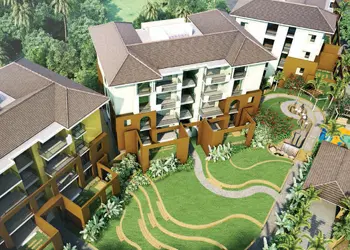
Aldeia De Goa
- 2, 3 4, 5 & 6 BHK Apartments, Plots & Villas
- 796 - 2,583 Sq. Ft.
- Bambolim, Goa
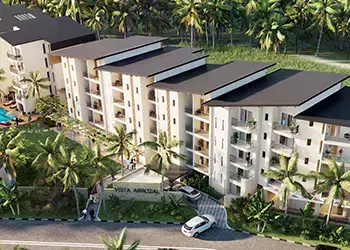
Conscient Vista Arrozal
- 2, 3, 4 & 5 BHK Apartment Duplex
- 1,775 - 4,545 Sq. Ft.
- Candolim, Goa
Residential property in Goa means any housing unit inside the state of Goa held for living or for use as a second home rather than for commercial purposes. It covers apartments in gated projects, standalone and gated villas, row houses, and residential plots in settlement zoned land. What separates Goa from every other Indian market is not the format but the title, because ownership here is recorded through a system carried over from Portuguese administration and layered with post 1961 Indian tenancy protections.
Goa is not an employment-driven property market. Unlike cities such as Bangalore or Gurgaon, people do not relocate here primarily for jobs. Demand is led by second-home buyers, NRIs, remote professionals who relocated after 2020, and investors seeking income from short-term holiday rentals. As a result, factors such as rental seasonality, beach accessibility, road conditions during the monsoon, and clear property titles are far more important than commute times or school density.
Configurations, carpet areas, current pricing, and possession timelines are regularly updated on each project page. Use the filters above to browse apartments, villas, and plots for sale in Goa by budget, bedroom configuration, property type, and developer.
Goa transitioned from being primarily a holiday-home destination to becoming a major real estate investment market around 2021. This transformation has been structural rather than seasonal.
Four major factors have driven this change. The rise of remote work encouraged many buyers from Mumbai, Bengaluru, Pune, and Delhi NCR to relocate permanently instead of visiting for short vacations. The opening of Manohar International Airport (Mopa) significantly improved connectivity to North Goa's coastal belt. The growth of short-term rental platforms turned second homes into income-generating assets, while the entry of institutional developers brought greater professionalism to a market that had traditionally been dominated by local builders and individual landowners.
Price growth has been concentrated rather than uniform across the state. The North Goa coastal belt—including Candolim, Anjuna, Assagao, and Siolim—commands the highest property values and has recorded the strongest appreciation. The central corridor around Porvorim, Panaji, and Bambolim behaves more like a conventional urban market due to its permanent residential population. South Goa witnessed growth later and from a lower price base, making it one of the more affordable regions in the state.
Two important trends define the current market. First, the rapid price surge witnessed in the early 2020s has moderated into steadier, more sustainable growth, making the purchase entry point more significant than it was a few years ago. Second, the pricing gap between premium coastal locations and the rest of Goa has widened considerably, meaning statewide average prices provide little insight into the value of an individual property.
Rental yield remains one of the biggest considerations for buyers. According to Savills India, second homes in Goa typically generate rental yields of around 5% to 8%, significantly higher than comparable apartments in many metro cities. Actual returns depend on the property's location, seasonal demand, occupancy levels, and management quality. Contact our team for current pricing and realistic rental yield estimates for your preferred micro-market.
North Goa and South Goa cater to different buyer preferences. Choosing between the two is often the first and most important decision when investing in Goa real estate.
| Factor | North Goa | South Goa |
|---|---|---|
| Character | Vibrant, commercial, and known for cafés, nightlife, and tourism. | Peaceful, greener, and lower-density residential environment. |
| Typical Buyer | Investors, short-term rental owners, and younger professionals relocating. | Retirees, families, and buyers seeking privacy and a relaxed lifestyle. |
| Price Level | Higher, especially along the premium coastal belt. | More affordable for comparable land and built-up properties. |
| Rental Demand | Strong and consistent due to high tourist volumes. | More seasonal but capable of achieving premium rental rates. |
| Nearest Airport | Manohar International Airport (Mopa) | Goa International Airport (Dabolim) |
| Main Locations | Candolim, Calangute, Anjuna, Vagator, Assagao, Siolim, Morjim, Porvorim, and Mapusa. | Colva, Benaulim, Varca, Cavelossim, Majorda, Palolem, and Margao. |
| Best For | Higher rental yields, tourism demand, and resale liquidity. | Lifestyle living, larger spaces, and lower entry prices. |
Flats in Goa and villas in Goa are generally more expensive in the northern part of the state. North Goa offers stronger rental demand and better resale liquidity, making it more attractive for investors. South Goa, on the other hand, provides larger land parcels, greater privacy, and a quieter lifestyle for the same budget. Neither region is objectively better - the right choice depends entirely on your investment goals and lifestyle preferences. Buyers who make poor decisions often choose a project based on marketing brochures rather than understanding the strengths of the local micro-market.
Goa offers four major residential property formats, each with a different level of legal due diligence.
- Apartments in Gated Communities: Flats in Goa range from compact 2 BHK apartments to premium 4 and 5 BHK duplex residences. Projects developed by established builders generally secure land conversion approvals, technical clearances, and Occupancy Certificates (OC) before sales begin, making them the simplest and lowest-risk option. Even so, buyers should independently verify every approval.
- Villas and Row Houses: Villas define Goa's second-home market, especially across the North Goa coastal belt and selected South Goa locations. Most villas are built on individual plots, often include private swimming pools, and generate some of the strongest short-term rental returns. Since these properties are usually constructed on individually owned land rather than large developer-acquired parcels, title verification is significantly more important.
- Residential Plots: Plots offer the highest potential returns but also carry the highest legal risk. Only land classified under settlement zones can normally be developed without additional approvals. Agricultural land requires an official conversion order before construction is legally permitted. Many so-called farmhouse plots lack this conversion, making this segment the source of many property disputes in Goa.
- Portuguese-Era Heritage Homes: Historic Goan houses attract buyers looking for restoration projects and unique architectural character. However, ownership records often extend back to Portuguese-language documents and involve multiple generations of inheritance. Such properties should only be purchased after thorough legal verification by an experienced Goa-based property lawyer familiar with historical land records.
Location decisions in Goa depend more on beach accessibility, road connectivity, and rental demand than on proximity to a city centre.
| Belt | Character | Best Suited For |
|---|---|---|
| Candolim & Calangute | Established North Goa coastal belt with developed infrastructure and strong tourist traffic. | Investors seeking proven rental income. |
| Anjuna, Vagator & Assagao | Premium villa destinations with boutique cafés, luxury living, and the state's highest property prices. | Luxury second-home buyers and long-term investors. |
| Siolim & Morjim | Peaceful coastal villages offering riverfront and beach access with growing villa demand. | Buyers wanting North Goa without heavy tourist crowds. |
| Porvorim & Mapusa | Residential inland corridor with schools, hospitals, and year-round local communities. | Families and permanent residents. |
| Panaji, Dona Paula & Bambolim | Urban capital region with established civic infrastructure and City Survey land records. | Apartment buyers seeking city conveniences with coastal access. |
| Dabolim, Vasco & Margao | South Goa's urban corridor close to the original airport and railway network. | Value-conscious buyers and permanent residents. |
| Colva, Benaulim, Varca & Cavelossim | Low-density South Goa beach belt offering larger plots and quieter surroundings. | Retirees and buyers seeking privacy. |
| Palolem & Far South Goa | The state's quietest coastal region with seasonal tourism and low-density development. | Lifestyle buyers with a long-term investment horizon. |
Manohar International Airport (Mopa), located in Pernem Taluka, has been operational since December 2022 and represents one of the most significant infrastructure developments in Goa's recent history.
Before Mopa Airport opened, all passengers arrived at Dabolim Airport in South Goa and often spent more than an hour driving north to reach the popular beach destinations. Today, North Goa's coastal belt is approximately 25 to 30 minutes from an international airport, dramatically improving accessibility. Previously overlooked areas such as Pernem Taluka have also become attractive investment destinations.
Passenger traffic reflects this transformation. Between April 2025 and March 2026, Mopa Airport handled approximately 53.76 lakh passengers, representing year-on-year growth of about 15.8%. The airport is located roughly 40 km from Panaji by road.
For property buyers, this means North Goa now enjoys direct international connectivity and an emerging development corridor in Pernem. Meanwhile, South Goa has lost some of the airport advantage it once held, contributing to comparatively slower price appreciation. Investors purchasing for short-term holiday rentals should always evaluate actual airport travel times instead of relying solely on project marketing material.
Land title verification is the single most important aspect of buying property in Goa and differs significantly from property transactions in most other Indian states.
Form I & XIV together constitute Goa's Record of Rights.
- Form I records the legal ownership of the land.
- Form XIV records cultivation, tenancy, and other legal rights or claims attached to the property.
Both documents must be obtained and carefully examined before purchase. If a seller provides only Form I while dismissing the importance of Form XIV, buyers should proceed with caution. In urban areas such as Panaji, Margao, Mapusa, and Vasco, the equivalent ownership document is Form D, issued by the City Survey Department.
Mundkar rights continue even after a property is sold. Under the Goa, Daman and Diu Mundkars (Protection from Eviction) Act, 1975, a lawful occupier enjoys statutory occupancy rights that transfer to the new owner upon sale. These rights are not extinguished by a registered sale deed. Where a Mundkar entry exists, buyers should ensure that the claim has either been officially dismissed by the Mamlatdar or settled through a registered deed before completing the purchase.
Tenancy rights are similarly protected under the Goa Agricultural Tenancy Act, 1964. A recorded tenant retains statutory protections even after ownership changes, making tenancy verification equally important during due diligence.
Not every recorded claim remains valid forever. Some names continue to appear on Form XIV decades after individuals have left the property, while others may be under legal dispute. Although buyers can seek a negative declaration through the Mamlatdar's Court, resolving these issues before completing the purchase is far safer than inheriting legal proceedings afterwards.
Always obtain both the digital extract and the certified physical copy of land records from the Taluka Mamlatdar, as discrepancies occasionally exist between the two. Carefully review every entry relating to tenancy and cultivation, and ensure that the seller's name matches the registered title deed exactly. Even minor spelling differences or outdated names can delay mutation and prevent registration at the Sub-Registrar's office.
Agricultural land in Goa cannot legally be developed until it has been converted for non-agricultural use. This conversion approval is known as a Conversion Sanad.
Under the Goa Land Revenue Code, agricultural land must receive a valid Conversion Sanad before it can be used for residential, commercial, or industrial development. Without this approval, any construction is considered illegal, regardless of assurances from the seller or existing buildings nearby. Land marketed as a farmhouse plot is often unconverted agricultural land, making it one of the most common risks in Goa's plot market.
The conversion process involves approvals from multiple government departments, each verifying a different aspect of the property.
- Town and Country Planning Department: Confirms that the proposed conversion complies with the Regional Plan or the applicable Outline Development Plan (ODP).
- Forest Department: Verifies that the land is not classified as private forest, which carries significant construction restrictions.
- Revenue Department: Confirms clear ownership and ensures there are no pending claims under the Goa Agricultural Tenancy Act.
Only land classified under a Settlement Zone can generally be developed without further land-use conversion. Other categories require conversion, while certain classifications cannot be converted at all. Two Goa-specific land categories—Khajan and Ker land—appear in Form XIV and are subject to additional restrictions. Coastal Khajan land may also fall under Coastal Regulation Zone (CRZ) regulations.
Always verify the original Conversion Sanad at the Mamlatdar's office. Never rely solely on a photocopy provided by the seller.
The Coastal Regulation Zone (CRZ) rules determine how close development can take place near the coastline. Since Goa's real estate market is heavily centred around beaches and waterfront locations, CRZ regulations affect a significant portion of premium properties.
Land located near beaches, rivers, backwaters, creeks, or mangroves often falls within a regulated coastal zone. Development permissions depend on several factors, including the property's CRZ classification, its distance from the High Tide Line (HTL), and the applicable Coastal Zone Management Plan (CZMP). Ironically, plots offering uninterrupted sea views are often the ones subject to the strictest development restrictions.
Before purchasing any waterfront property, obtain the CRZ classification in writing and verify it against the official Coastal Zone Management Plan for that area. If a developer or seller cannot clearly establish the property's CRZ status, it is generally advisable to avoid the transaction. Buildings constructed in violation of CRZ regulations are not automatically regularised simply because they have existed for many years or are already occupied.
Many property records in Goa predate 1961 and continue to follow systems inherited from Portuguese administration. As a result, title verification for older properties requires specialised legal expertise.
Historic property documents often include an Escritura (registered deed), while ownership is identified through a Matriz number, which must correspond with the survey details recorded in Form I and XIV. Property succession is completed through an Inventário proceeding. If an Inventário is incomplete or excludes a legal heir, the property's title remains defective and disputes may arise years later.
Many pre-1961 records remain in Portuguese and contain legally enforceable notes relating to tenancy, inheritance, and land partition. These records should only be examined by professionals familiar with Goa's historical property documentation.
Goa also follows a Common Civil Code governing inheritance and matrimonial property. In many cases, spouses jointly own matrimonial assets, meaning that additional signatures and legal consent may be required during a property transaction. A sale deed executed without all legally required parties may later be challenged.
None of these factors make Goa a difficult property market. They simply make it essential to appoint an experienced Goa-based property advocate and obtain a comprehensive 30-year title search before completing any purchase.
The essential documentation includes Goa RERA registration (where applicable), Form I & XIV or Form D, Conversion Sanad, technical approvals, local authority licences, and the Occupancy Certificate.
Goa-Specific Documents
- Form I & XIV (or Form D in City Survey areas), including both the digital extract and certified physical copy obtained from the Mamlatdar.
- Verification that no Mundkar or tenancy rights exist, preferably supported by an official declaration from the Mamlatdar.
- Original Conversion Sanad for land previously classified as agricultural, independently verified at the Mamlatdar's office.
- Land zoning confirmation showing Settlement Zone status under the Regional Plan or applicable Outline Development Plan.
- CRZ classification certificate for properties located near beaches, rivers, backwaters, creeks, or mangroves.
- For heritage properties, the Escritura, Matriz reconciliation, Inscription Certificate, Description Certificate, and a complete Inventário.
Standard Property Documents
- Goa RERA registration number for under-construction projects, verified before making any payment.
- A 30-year title search report prepared by a qualified Goa property advocate.
- Nil Encumbrance Certificate from the Sub-Registrar and litigation search from the relevant Taluka Court.
- Technical clearance, sanctioned building plans, and approved Floor Area Ratio (FAR).
- Panchayat or Municipal construction licence and Health Department clearance where applicable.
- Occupancy Certificate (OC), confirming the building is legally authorised for occupation.
- No Dues Certificate covering house tax, property tax, water charges, and electricity dues.
- Survey plan with physical boundary verification against official land records.
- Mutation completed in the seller's name, ensuring the recorded name exactly matches the registered title deed.
Goa follows a slab-based stamp duty system. Stamp duty is calculated on the higher of the property's declared sale consideration or the market value assessed by the Sub-Registrar. Registration charges are payable separately at the time of property registration.
| Property Value | Stamp Duty |
|---|---|
| Up to ₹50 lakh | 3.5% |
| ₹50 lakh to ₹75 lakh | 4% |
| ₹75 lakh to ₹1 crore | 4.5% |
| ₹1 crore to ₹5 crore | 5% |
| Above ₹5 crore | 6% |
A registration fee is charged separately under the Registration Act and is also linked to the property's value slab. Since published figures may vary, buyers should confirm the exact registration charges with the Sub-Registrar's Office or their property advocate instead of relying solely on online calculators.
Two important points are specific to Goa. First, stamp duty is calculated on the higher of the declared sale consideration or the value assessed by the Sub-Registrar. Therefore, negotiating a lower purchase price does not reduce stamp duty below the government-assessed value. Second, amendments relating to the treatment of mortgage deeds and trust deeds were introduced before the Goa Legislative Assembly in 2025. Buyers financing their purchase with a home loan should verify the latest legal position with their advocate before completing the transaction.
Many buyers purchase property in Goa with the intention of renting it out when not in personal use. However, rental performance differs significantly from traditional long-term rental markets in metropolitan cities.
Goa's rental market is highly seasonal. The strongest demand generally occurs between November and February, followed by a smaller demand cycle during the monsoon months. Peak-season nightly rental rates can be several times higher than off-season rates, making annual occupancy more important than peak pricing alone.
Key Factors That Influence Rental Returns
- Location and Beach Access: Properties within walking distance of popular beaches typically generate significantly higher occupancy and rental income than homes located further inland.
- Professional Property Management: Villas managed by experienced operators with housekeeping, guest support, and listing management generally outperform self-managed properties despite management fees.
- Property Type: Private villas with swimming pools command premium rental rates and stronger occupancy compared to apartments, which explains why the villa segment has experienced stronger price appreciation.
- Local Regulations: Short-term holiday rentals are subject to local registration and compliance requirements that continue to evolve. Buyers should verify the latest rules applicable within the relevant Panchayat before estimating rental income.
According to Savills India, second homes in Goa typically generate rental yields in the range of 5% to 8%. These figures should be viewed as achievable benchmarks for well-located and professionally managed properties rather than guaranteed returns.
Yes. Any Indian citizen can purchase residential property in Goa. Unlike certain Himalayan states, Goa does not impose any state residency requirement for property ownership.
NRIs and OCI cardholders may purchase residential and commercial property in Goa without prior approval from the Reserve Bank of India (RBI), provided payments are made through eligible NRE, NRO, or FCNR accounts. However, agricultural land, plantation properties, and farmhouses remain outside this permission. Since a large proportion of land in Goa is originally classified as agricultural, NRI buyers should confirm that the required Conversion Sanad has already been issued before purchasing a plot.
Foreign nationals who are neither Indian citizens nor persons of Indian origin generally cannot acquire immovable property in India except under specific RBI regulations. Buyers should avoid complicated ownership structures or indirect arrangements and obtain independent legal advice if such proposals are presented.
If a Power of Attorney (PoA) is executed outside India, it should either be signed before an Indian Embassy or Consulate or be properly notarised and apostilled before being stamped in India. For Goa property transactions, the PoA should specifically authorise appearances before the Mamlatdar, mutation proceedings, and property registration—not merely execution of the sale deed.
Most property disputes in Goa arise from a few recurring mistakes that can be avoided through proper due diligence.
- Buying a farmhouse plot without verifying the Conversion Sanad.
- Accepting Form I without reviewing Form XIV, where tenancy and Mundkar rights are recorded.
- Treating a Mundkar entry as a minor issue rather than a legally protected occupancy right.
- Making payment before tenancy or Mundkar claims have been legally resolved.
- Skipping CRZ verification when purchasing beachfront or waterfront property.
- Using a lawyer unfamiliar with Goa's Portuguese-era records, Inventário proceedings, and local land laws.
- Purchasing an occupied building that lacks a valid Occupancy Certificate.
- Estimating rental returns solely on peak tourist season rates instead of annual occupancy.
- Ignoring road accessibility during the monsoon season.
- Mundkar and tenancy rights survive a property sale and transfer to the new owner.
- Form I & XIV constitute Goa's Record of Rights, while Form D is used in urban survey areas.
- Agricultural land requires a valid Conversion Sanad before any legal construction can take place.
- Only Settlement Zone land generally permits residential construction as of right.
- CRZ regulations govern development near beaches, rivers, creeks, backwaters, and mangroves.
- Many pre-1961 property records remain in Portuguese and continue to have legal validity.
- Goa follows a Common Civil Code that affects inheritance and spousal property rights.
- Stamp duty ranges from 3.5% to 6%, depending on the property's value.
- Manohar International Airport (Mopa) has been operational since December 2022, significantly improving North Goa's connectivity.
- Any Indian citizen can buy residential property in Goa, while NRIs may purchase under FEMA regulations, excluding agricultural land.