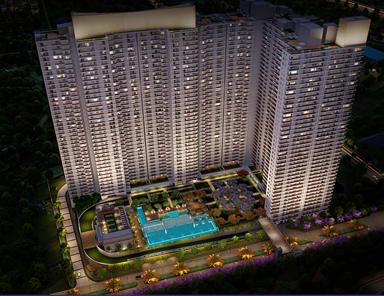
NRIs, PIOs and OCIs can buy Godrej Samaris (Sector 53, Golf Course Road, HARERA GGM/1059/791/2026/31) under FEMA without prior RBI approval, funding through an NRE or NRO account. The pre-launch entry is a refundable ₹20 Lakh EOI, with base pricing near ₹35,000 per sq.ft against DLF Camellias resale at ₹75,000 to ₹80,000 per sq.ft on the same corridor. The capital case is the corridor gap, not the 2.5 to 3.5% rental yield. Read this before you sign.
Can an NRI buy Godrej Samaris on Golf Course Road, and is it a sound capital play in 2026? The short answer is yes on both counts, but the structure matters more than most NRI buyers expect. The FEMA rules are straightforward, the funding route is clear, and the refundable EOI protects you in the pre-RERA window. The real work is in the capital case and the repatriation planning.
The most common mistake we see in NRI advisory work at HCO Real Estates is buyers treating a Golf Course Road purchase like a rental-yield play. It is not. GCR yields run an honest 2.5 to 3.5%. We had a Dubai-based buyer last quarter who almost walked away over the yield until we reframed it: the Samaris case is the capital gap between the ₹35,000 per sq.ft pre-launch base and the ₹75,000+ corridor resale benchmark. That reframe is the entire NRI thesis.
This guide uses data from the HARERA Gurugram portal (haryanarera.gov.in), the RBI FEMA framework on residential property acquisition by NRIs, the Income Tax Act provisions on TDS and repatriation, the Godrej Samaris RERA filing, and the HCO Real Estates NRI desk advisory notes. Pricing was cross-checked on 25 May 2026. Read this before you sign.
Can NRIs Buy Godrej Samaris? The FEMA Position
Yes. Under the Foreign Exchange Management Act (FEMA), Non-Resident Indians (NRIs), Persons of Indian Origin (PIOs), and Overseas Citizens of India (OCIs) can purchase residential property in India without prior approval from the Reserve Bank of India. Godrej Samaris, as a freehold residential project in Sector 53, qualifies fully under this general permission.
FEMA Eligibility at a Glance
Buyer Category | Can Buy Residential? | RBI Approval Needed? |
|---|
NRI (Indian passport, resident abroad) | Yes | No |
PIO (Person of Indian Origin) | Yes | No |
OCI (Overseas Citizen of India) | Yes | No |
Foreign national (non-Indian origin) | Restricted | Case-by-case RBI approval |
Source: RBI FEMA framework on acquisition of immovable property by NRIs, PIOs and OCIs, current as of May 2026. Verify the latest FEMA notification on rbi.org.in before placing any payment, as foreign-exchange rules are reviewed periodically.
The data shows the FEMA position for NRIs buying Godrej Samaris is clean. There is one structural restriction worth noting: NRIs can buy residential and commercial property freely, but cannot buy agricultural land, plantation property, or farmhouses without specific RBI approval. Samaris is residential, so this does not apply. This is non-negotiable due diligence: confirm your buyer category (NRI, PIO, or OCI) matches your passport and visa status before funding.
Funding the Purchase: NRE, NRO, and Home Loan Routes
An NRI funds a Godrej Samaris purchase through one of three routes, or a combination. The route you choose has direct consequences for repatriation later, so the funding decision is really a repatriation decision made early. Get this right at the EOI stage, not at registration.
The Three Funding Routes
|
Route
|
How It Works
|
Repatriation Impact
|
|
NRE Account
|
Funds remitted from abroad into a Non-Resident External account
|
Fully repatriable (principal + gains), subject to limits
|
|
NRO Account
|
Funds from Indian-source income (rent, dividends) in a Non-Resident Ordinary account
|
Repatriable up to USD 1 million per financial year, with documentation
|
|
Home Loan
|
Indian bank or NBFC loan, typically 70 to 80% of value, EMI from NRE/NRO
|
Loan repayment from NRE preserves repatriability of that portion
|
Source: RBI FEMA framework on NRI bank accounts and home loans, May 2026. Verify the current per-financial-year repatriation cap and loan-to-value norms with your bank, as these are revised periodically. The escrow account for Godrej Samaris is maintained with HDFC Bank per the RERA filing.
The implication for the NRI buyer: if you intend to take your money back out of India eventually, funding from your NRE account is the cleanest route because both principal and gains are fully repatriable. NRO-funded purchases face the USD 1 million per financial year repatriation cap. A home loan with EMI serviced from NRE preserves the repatriability of the loan-funded portion. Plan the funding mix at EOI, not later. Read this before you sign.
The Refundable EOI and Pre-RERA Protection
Godrej Samaris is currently in its pre-launch Phase 1 window. The entry mechanism is a refundable Expression of Interest (EOI), not a binding booking. For an NRI buyer doing due diligence from abroad, this structure is a genuine protection layer, provided you understand exactly what it does and does not lock.
What the ₹20 Lakh EOI Locks for an NRI
- Pre-launch base pricing near ₹35,000 per sq.ft, before the formal launch price revision
- Priority floor and configuration selection in the next allotment cycle
- A fully refundable position until the permanent HARERA registration is confirmed and a formal booking is signed
- Time to complete FEMA documentation and funding setup from abroad without losing the pre-launch rate
Do not accept verbal confirmation of the refund terms. The EOI receipt must state in writing that the ₹20 Lakh is fully refundable until permanent RERA confirmation and formal booking. The permanent HARERA registration for Samaris is GGM/1059/791/2026/31, dated 04 May 2026. Verify this number directly on haryanarera.gov.in. Be aware that some competing pages have circulated the wrong number, which actually belongs to Godrej Sora, a different project. This is non-negotiable due diligence: verify the RERA number yourself before funding beyond the EOI.
The Capital Case: Why GCR Scarcity Beats Rental Yield
The single most important reframe for an NRI buyer is this: Godrej Samaris is a capital-appreciation play on corridor scarcity, not a rental-yield play. Golf Course Road rental yields run an honest 2.5 to 3.5% at this ticket size. If you are underwriting on yield alone, the numbers will look thin. The real case is the corridor gap.
The Corridor Capital Gap (Q1 2026)
|
Metric
|
Godrej Samaris
|
DLF Camellias (corridor benchmark)
|
|
Status
|
Pre-launch new-build
|
Resale (delivered 2017)
|
|
Price per Sq.Ft (super)
|
Approx ₹35,000 (pre-launch)
|
₹75,000 to ₹80,000 (resale)
|
|
PSF Gap
|
Under 50% of Camellias PSF
|
Corridor benchmark
|
|
3 BHK Entry Ticket
|
Approx ₹10 to 11 Cr (3,000 sq.ft)
|
Not offered
|
|
4 BHK Ticket
|
Approx ₹14.5 Cr+ (4,000 sq.ft)
|
₹65 to 75 Cr (7,196 sq.ft resale)
|
|
Rental Yield
|
2.5 to 3.5% (corridor)
|
2 to 3%
|
|
Capital Play
|
Pre-launch base vs benchmark gap
|
Tracks GCR resale curve
|
Source: HCO Real Estates project data, SuperLuxeRE RERA-filed cost analysis, MagicBricks and Square Yards Q1 2026 resale listings. Resale figures are listing prices, not verified transaction prices. Verify Camellias transaction registry data via the Sub-Registrar's office for actual figures before relying on the gap.
The data shows the Samaris capital case rests on RERA-filed fundamentals: a land cost of ₹1,218 crore (₹162 crore per acre), a construction investment near ₹1,677 crore, and a total project cost around ₹2,895 crore, fully funded. For an NRI with a 4 to 7 year horizon to the 2033 possession, the play is the gap between the ₹35,000 pre-launch base and the eventual GCR resale benchmark, not the rental cheque. Match the product to the goal.
Repatriation: Getting Your Money Back Out
Repatriation is the part of NRI property investment that buyers underplan and later regret. The rules are workable, but they reward planning done at purchase, not at sale. Here is how the money flows back out when you eventually sell Godrej Samaris.
Repatriation Rules on Sale
- NRE-funded purchase: Both the original principal and the capital gains are fully repatriable, subject to the standard documentation and tax clearance.
- NRO-funded purchase: Repatriation is capped at USD 1 million per financial year, inclusive of all NRO remittances, with Form 15CA and 15CB certification by a chartered accountant.
- Number of properties: Sale proceeds of up to two residential properties are repatriable under the general FEMA permission. Beyond two, specific conditions apply.
- Holding period: There is no minimum holding period under FEMA for repatriation, but capital gains tax treatment changes at the 24-month mark (long-term vs short-term).
The implication for the NRI buyer: if Golf Course Road appreciation plays out as the corridor scarcity thesis suggests, your largest single repatriation event will be the eventual sale. Fund through NRE where possible, keep every remittance receipt, and engage a chartered accountant for the Form 15CA and 15CB certification before the sale, not after. This is non-negotiable due diligence for a cross-border capital position.
Tax, TDS, and the Paperwork NRIs Miss
The Indian tax framework treats NRI property buyers and sellers differently from residents in three specific ways. Each one has a cash-flow consequence. Plan for all three before you sign, because the paperwork burden lands on the NRI, not the developer.
The Three Tax Items NRIs Must Plan For
Item | Rate / Trigger | Who Handles It |
|---|
GST (under-construction) | 5% on base | Paid via developer with each tranche |
Stamp Duty (Haryana) | 7% male / 5% female | Buyer, at registration |
Registration Fee | 1% of agreement value | Buyer, at registration |
TDS on purchase (NRI seller resale) | Applies if buying from another NRI | Buyer deducts and deposits |
Capital Gains Tax (on future sale) | Long-term after 24 months | NRI seller, via CA filing |
Source: Income Tax Act provisions on NRI property transactions, Haryana Stamp Act schedule, Central GST Act 2017, May 2026. TDS rates and capital gains treatment are revised in annual finance bills. Verify current rates with a chartered accountant before any transaction. The female-buyer stamp duty advantage of 2 percentage points is a meaningful structuring lever for jointly held or sole-female NRI ownership.
The data shows the all-in cost for an NRI runs materially above the base price once GST, stamp duty, registration, PLC and floor-rise are stacked. On a ₹14.5 Cr 4 BHK base, the all-in landing can be 14 to 16% higher. The female-buyer stamp duty rate (5% versus 7%) is a real saving worth structuring for. Engage a chartered accountant familiar with NRI transactions at the EOI stage, not at registration.
Action Checklist for the NRI Buyer
This is the checklist HCO Real Estates uses with every NRI Godrej Samaris buyer before they fund beyond the refundable EOI. Work through these in order. Each step is a real protection, especially when you are transacting from abroad and cannot walk into the sub-registrar's office yourself.
Before the EOI
- Confirm your buyer category (NRI, PIO, or OCI) matches your current passport and visa status.
- Verify the permanent HARERA registration GGM/1059/791/2026/31 directly on haryanarera.gov.in. Do not rely on a forwarded screenshot.
- Get the EOI receipt with the fully-refundable terms in writing before remitting the ₹20 Lakh.
- Set up or confirm your NRE and NRO accounts with an Indian bank for the funding route.
Before the Formal Booking
- Engage a chartered accountant familiar with NRI property transactions for the tax and repatriation plan.
- Decide the funding mix (NRE vs NRO vs home loan) based on your eventual repatriation goal.
- Appoint a Power of Attorney (PoA) holder in India if you cannot be present for registration. Get the PoA notarised and apostilled in your country of residence.
- Run the full landed-cost worksheet: base + PLC + floor-rise + GST + stamp duty + registration. Do not underwrite on the base price alone.
Before Possession (2033)
- Track Godrej Properties' RERA quarterly construction filings as the official progress reference (Godrej is BSE/NSE listed with mandatory quarterly disclosures).
- Plan the closing-stack cash mobilisation, factoring cross-border remittance timelines, 6 months before possession.
- Conduct a snagging inspection at handover, in person or via an appointed representative.
- Verify the Occupancy Certificate has been issued before the final possession tranche.
This is non-negotiable due diligence. Work through each step in order. The NRI buyer who skips the FEMA funding plan or the repatriation structure is not saving time. They are accepting avoidable friction on a cross-border ₹10 Cr+ position. Read this before you sign.
Frequently asked questions
Can NRIs buy Godrej Samaris without RBI approval?
Yes. NRIs, PIOs, and OCIs can purchase residential property in India, including Godrej Samaris in Sector 53, under the general permission of the Foreign Exchange Management Act (FEMA) without prior approval from the Reserve Bank of India. The funding must come through an NRE or NRO account, or a home loan from an Indian bank serviced from these accounts. The only restriction is that NRIs cannot buy agricultural land, plantation property, or farmhouses without specific RBI approval, none of which applies to Samaris since it is a residential project. Verify the latest FEMA notification on rbi.org.in before funding.
How should an NRI fund a Godrej Samaris purchase?
An NRI funds the purchase through an NRE account (funds remitted from abroad, fully repatriable), an NRO account (Indian-source income, repatriable up to USD 1 million per financial year), or a home loan from an Indian bank or NBFC at typically 70 to 80% of value with EMI serviced from NRE or NRO. The funding route is really a repatriation decision made early: NRE funding gives the cleanest repatriation path because both principal and gains are fully repatriable. Plan the funding mix at the EOI stage. The Godrej Samaris escrow account is maintained with HDFC Bank per the RERA filing.
Is Godrej Samaris a good investment for an NRI?
The Godrej Samaris case for an NRI is capital appreciation on corridor scarcity, not rental yield. Golf Course Road yields run an honest 2.5 to 3.5%. The capital play is the gap between the Samaris pre-launch base of approximately ₹35,000 per sq.ft and DLF Camellias resale at ₹75,000 to ₹80,000 per sq.ft on the same corridor, under 50% of the benchmark PSF for a new-build. With RERA-filed fundamentals (₹1,218 crore land cost, ₹2,895 crore total project cost, fully funded) and a 4 to 7 year horizon to the 2033 possession, the thesis is the corridor gap. Samaris is also the last large new-build land parcel on Golf Course Road. Verify all figures independently before any commitment.
How does repatriation work when an NRI sells Godrej Samaris?
Repatriation depends on how you funded the purchase. If you funded through an NRE account, both the original principal and the capital gains are fully repatriable, subject to documentation and tax clearance. If you funded through an NRO account, repatriation is capped at USD 1 million per financial year with Form 15CA and 15CB certification by a chartered accountant. Sale proceeds of up to two residential properties are repatriable under the general FEMA permission. There is no minimum FEMA holding period, but capital gains tax treatment changes at the 24-month mark between short-term and long-term. Fund through NRE where possible and engage a CA before the sale, not after.
What is the RERA number for Godrej Samaris and why does it matter for NRIs?
The permanent HARERA registration for Godrej Samaris is GGM/1059/791/2026/31, dated 04 May 2026. This matters acutely for NRI buyers because some competing pages have circulated the wrong number, which actually belongs to Godrej Sora, a different project. For an NRI transacting from abroad who cannot walk into the office, the RERA number is the single most important verification. Confirm it directly on haryanarera.gov.in before funding beyond the refundable ₹20 Lakh EOI. The RERA-declared completion date is Q3 2033, and Godrej Properties files mandatory quarterly construction progress disclosures as a BSE and NSE listed company.










































































































































































































































































































.webp&w=750&q=75)










.webp&w=750&q=75)